
Guide
What Actually Happens When We Show Up in Skokie
A look at what our techs actually check on a Skokie service call, and why houses built between 1938 and 1994 need a different eye than newer builds.
Local detail
What the Weather Here Does to It
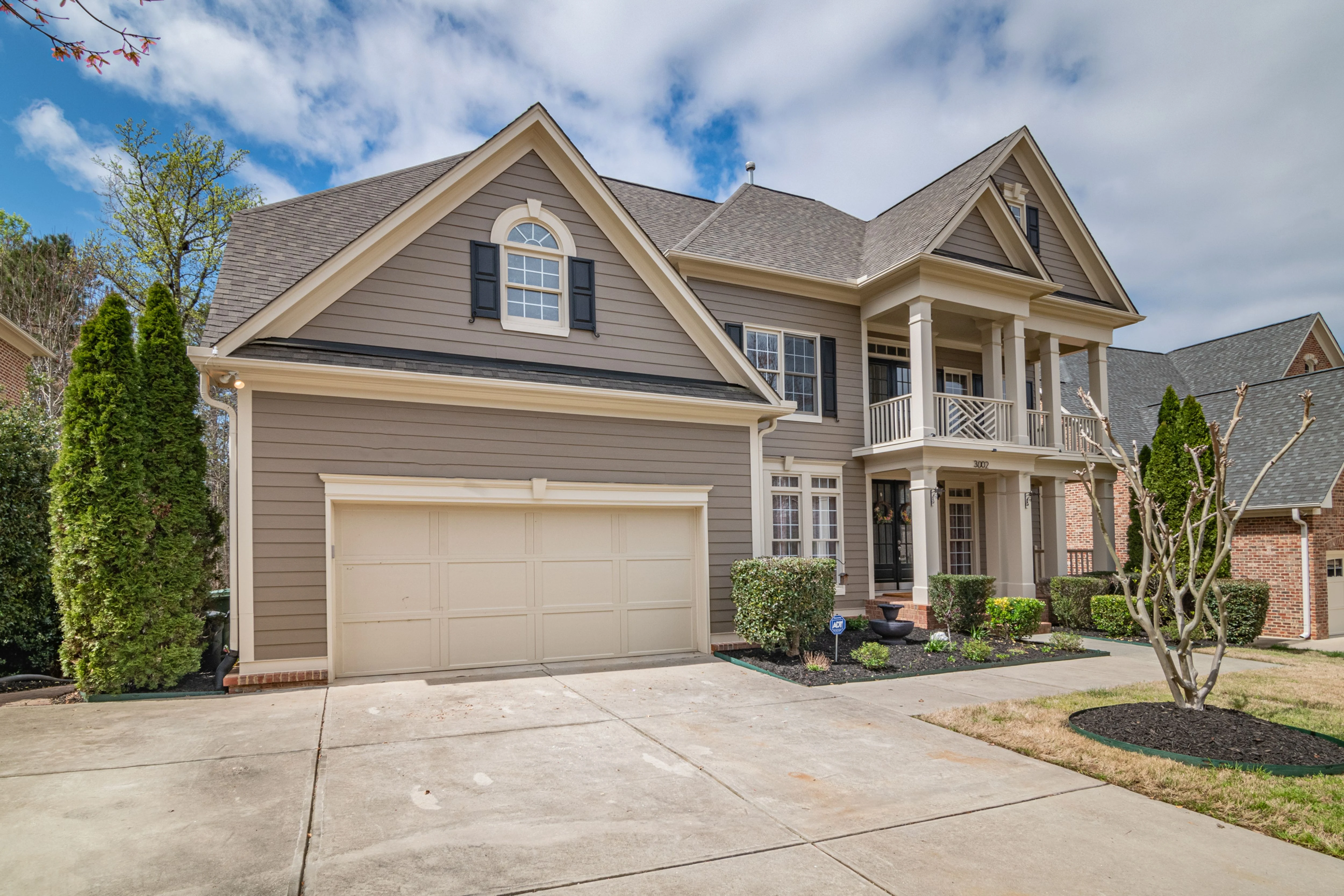
Skokie sits in a cold moderate climate band, and that shows up in the doors more than most owners expect. Steel panels contract in a hard freeze, and on a house built before the 1980s the panel gaps that were cut tight in summer show up as whistling drafts and rubbing rollers by December. Torsion springs lose a measurable amount of tension in cold air, which is why a spring that snapped fine in September will bind or squeal in January even with no other change.\n\nBecause most of the housing stock here went up between 1938 and 1994, with the heaviest run in the 1960s and 70s, a lot of the doors we open up still have the original galvanized track and hardware sized to specs nobody stocks new anymore.
Cold makes old grease stiffen and old bearings seize a little faster than they would in a mild climate. That combination - older hardware plus real winter swings - is why a call that looks like \"the door won't open\" in Skokie is more often a tension or alignment problem than a broken opener.\n\nA service call has to account for both things at once: what the house was built with, and what the season is doing to it right now.
The area
Season by Season
Winter is when torsion springs get called out the most - cold steel loses tension, and a door that was fine in fall suddenly won't lift evenly or drops fast on the way down. That's the single biggest call type we get on 1960s and 70s builds once temperatures drop and stay down.\n\nSpring brings freeze-thaw cycles that shift concrete slabs a fraction of an inch, enough to throw off track alignment on a door that's been running straight for years. We see more roller and track calls in March and April than any other stretch.\n\nSummer is opener season - heat expands metal and stresses old drive gears and belts, especially on chain or belt drives installed decades ago that were never swapped for anything newer.
It's also when panel dents and rust from winter road salt finally get noticed, since people are outside looking at the garage more.\n\nFall is the quiet check-up window, and honestly the best time to catch a spring near the end of its life before the cold hits and it goes. We tell people that every year and most still call us in January instead.
What we find
What It Costs
We don't have a price sheet we can hand you before we look at the door, and we're not going to invent one here. What we can tell you is what drives the number up or down on a given call.\n\nAge of the hardware matters more than most people think. A door on a house from the original 1960s building boom often needs a torsion spring or track hardware sized differently from what's on the shelf at a big box store, which means the part itself, not the labor, is what changes the estimate.
Newer doors from later renovations are usually a faster, cheaper fix because the parts are current stock.\n\nMedian household income in this service area runs around $96,794, and what we see in practice is that owners at that level tend to ask for a straight repair quote first and only move to full replacement when we can show them the repair won't hold - a stripped opener gear on a 30-year-old unit, for example, where a new gear costs almost as much as a new opener.\n\nThe honest limit here: we can't quote a spring or panel replacement over the phone. Torsion spring wind and panel sizing both depend on measuring the actual door, and guessing at that number wastes your time and ours.
How we work
What Is Going On
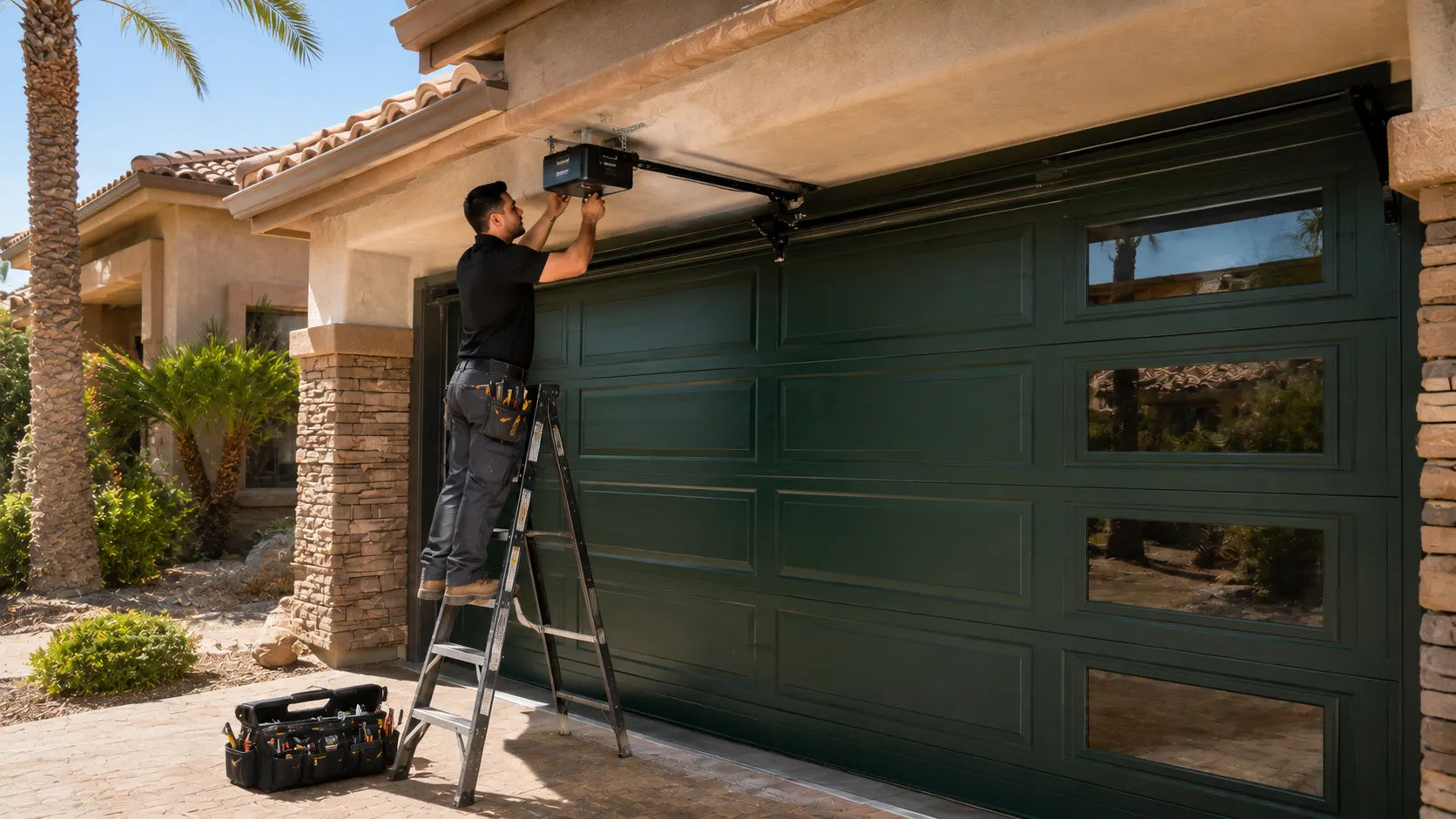
When we pull up, the first ten minutes are diagnostic, not repair. We check spring tension by hand, run the door through a full cycle watching the track for binding, check cable wear at the drum, and pull the opener cover if the door is motorized to look at gear condition and force settings.
On the older houses in this area - and there are a lot of them, since the bulk of local stock dates to the 1960s and 70s - we're also checking whether the track and hardware are original, because replacement parts for that era sometimes have to be special ordered rather than pulled off a shelf.\n\nWe serve the area running from Golf, about 3 miles out, through Niles, Kenilworth, and Winnetka, and out as far as towns like Rosemont and Mount Prospect closer to 8 to 10 miles away. Distance changes how fast we can get to you, not what the job needs once we're there.\n\nAfter the diagnostic, we tell you straight whether it's a repair or whether the door's past the point where fixing it makes sense - usually that's an opener over 20 years old or a door with enough rust-through on the panels that a new spring just exposes the next failure.
Questions
Common questions
Why did my spring break in the middle of winter with no warning?
Cold steel loses tension gradually, and springs on houses built in the 1960s and 70s - most of the stock in this area - are often original or close to it. A spring near the end of its life will hold through fall and then let go on the first hard cold snap because the metal is simply more brittle at low temperatures.
Do you charge more for older doors?
Not for labor, but parts for original hardware from the 1960s and 70s building boom sometimes aren't standard stock sizes, which can change the parts cost on the estimate. We tell you that before we order anything, not after.
Can you give me a price over the phone?
Not for a spring or panel job. Torsion spring wind and panel sizing depend on measuring your actual door, and a phone estimate on either one is a guess we're not willing to make.
How far out do you go from Skokie?
Our service area covers towns from Golf, about 3 miles away, out through Rosemont and Mount Prospect around 8 to 10 miles out. Check with us directly if your address is near the edge of that range.
Ready when you are
Need a garage door sorted in Skokie?
Skokie Garage Door Pros repairs and installs garage doors, springs and openers in Skokie, IL and the surrounding area.