
Guide
What That Noise in Your Skokie Garage Actually Means
Skokie homes built mostly 1938-1994 develop specific noise patterns from cold winters and aging hardware. Here's what each sound means and what it costs to fix.
Local detail
What the Weather Here Does to It
Skokie sits in a cold moderate climate band, and that matters more for garage doors than most homeowners think. The freeze-thaw cycle every winter works on steel tracks, nylon rollers, and the lubricant inside torsion springs. Metal contracts in the cold, which tightens tolerances that were fine in August and loose or binding in January. A door that rolled quietly all summer starts grinding or thumping the first hard cold spell, and it's not because something broke overnight - it's because the clearance between roller and track finally closed up.
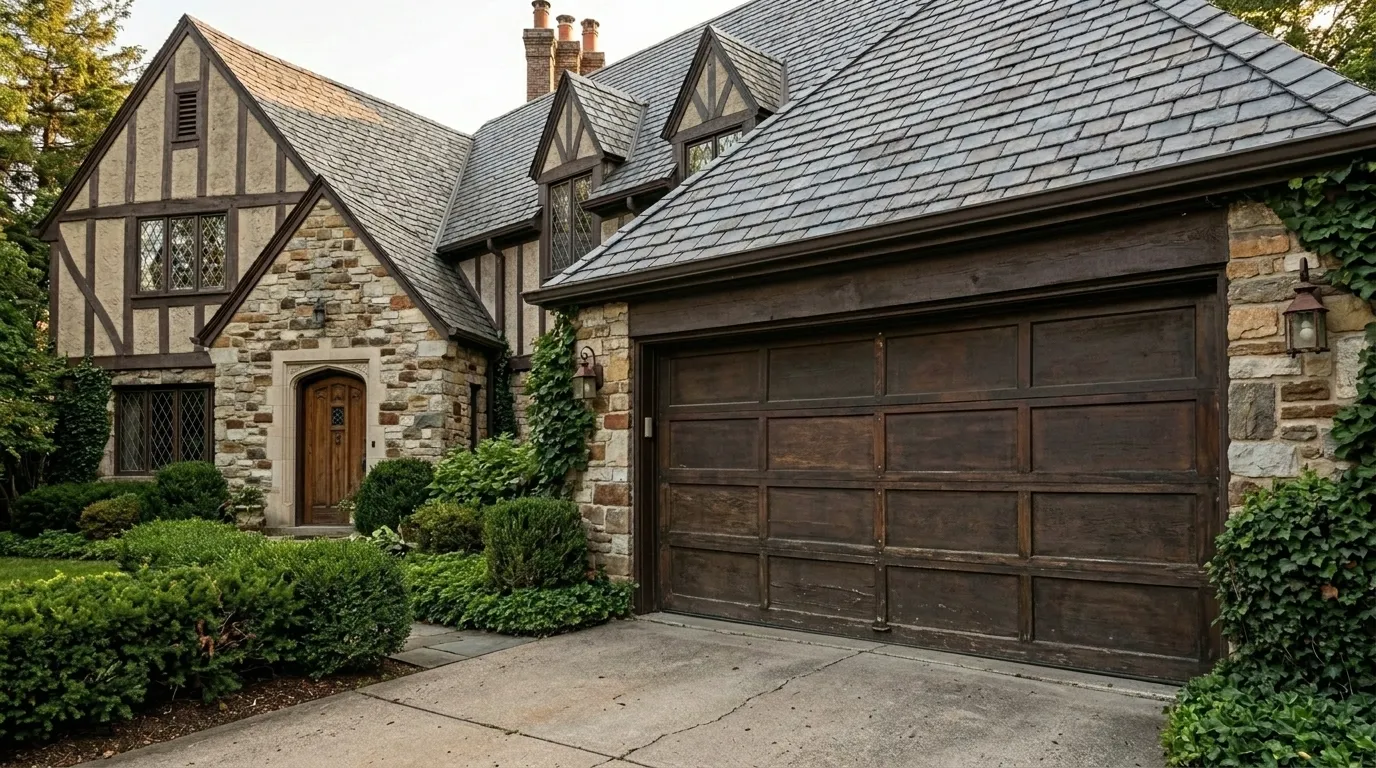
Most of Skokie's housing went up between 1938 and 1994, with the bulk from the 1960s and 70s. That means a lot of original or first-replacement hardware still in service, sized for an era before insulated doors and heavier openers became standard. Steel tracks from that period were not built with today's thermal swings in mind, and neither were the springs. When a spring loses temper from decades of cold-hot cycling, it doesn't always snap clean - sometimes it just starts making a tick or a pop on the way up, which is your warning before the real failure.
A door that's quiet in July and loud in December isn't malfunctioning randomly. It's telling you the cold found the weak point first.

The area
Season by Season
Spring in Skokie brings the first real test after a winter of contraction. Doors that were sluggish in January often loosen up as temperatures rise, but that's also when you hear the squeaks that were masked by stiff cold grease - rollers finally moving enough to reveal dry bearings.
Summer is usually the quiet season here, mechanically speaking. Metal is at its most expanded, tolerances are loosest, and most doors run smoothly. It's the best window to catch a spring on its way out before winter makes it worse, since a slow leak of noise (a soft click, a faint scrape) is easier to hear when everything else is silent.
Fall is when Skokie's older housing stock starts showing its age again. Weatherstripping on doors from the 1960s-70s era, if never replaced, dries and cracks, letting cold air whistle through gaps rather than seal against them. That whistling gets mistaken for a hardware problem when it's really the seal.
Winter is where the cold moderate climate band does its heaviest work. Torsion springs tighten, lubricant thickens, and a door built or repaired decades ago with hardware sized for that older housing stock shows every bit of wear as grinding, banging, or a hard catch partway up. This is the season most service calls come in, and it's rarely a coincidence.
What we find
What It Costs
We're not going to give you a number that doesn't mean anything without seeing the door. What we can tell you is what drives the cost up or down in a house like the ones common here - built mostly between the 1960s and 1970s. Original hardware on a door that age is often a nonstandard size or an older spring wind, which takes longer to source and install than a stock modern part. That's the honest limitation: if your door dates to the original build, expect the job to take a bit longer and possibly cost more than a newer door with common parts, simply because we're matching hardware to an older frame instead of dropping in a universal kit.
Skokie's median household income runs $96,794, and across the wider service area there are roughly 152,489 owner-occupied houses out of 325,582 households - a mix that includes plenty of older single-family homes still running their original or first-replacement door hardware. That's the population we're actually working on, not a hypothetical newer subdivision.
We won't quote a price without seeing the spring wind, the track condition, and how the cold has treated the metal. What we will say is that catching a noise early, before a spring fails under load, almost always costs less than an emergency call after it snaps.
How we work
What Is Going On
A grinding sound usually means a roller has gone dry or worn flat - common on doors old enough to still have the original rollers from that 1938-1994 housing era. A sharp bang, especially in cold weather, is almost always a spring losing tension or breaking outright, and that's not a DIY fix on a torsion system under load.
A rhythmic thump as the door travels is often a bent track section, sometimes from years of thermal expansion and contraction pulling at old mounting brackets. A high-pitched squeal that shows up mainly in winter points to lubricant that's thickened in the cold moderate climate here and needs replacing with something rated for the temperature swing, not just any household oil.
If your house sits anywhere near Golf, Niles, Kenilworth, or the other close-in areas we cover, the housing stock and weather pattern are close enough to Skokie's that the same noise diagnostics apply. But the fix still depends on what's actually installed on your door, and that's not something we guess at over the phone. We look at the hardware, tell you straight whether it's a lubrication job or a hardware replacement, and we won't sell a full door swap when a spring and a set of rollers will quiet it down for years.
Questions
Common questions
Why does my garage door only make noise in the winter?
Cold moderate winters here tighten steel tracks and thicken lubricant, closing the tolerances that were fine in summer heat. Combined with hardware that's often original to houses built in the 1960s-70s, that seasonal contraction is usually what turns a silent door into a grinding or banging one once temperatures drop.
Is a noisy door always a sign of a broken spring?
No. Grinding often points to worn rollers, a squeal usually means thickened winter lubricant, and a thump can be a bent track section. A sharp bang or the door refusing to move smoothly is more likely spring-related, especially in a house with older, original hardware from the area's typical 1960s-70s construction era.
Should I fix the noise myself or call someone?
Lubrication and loose hardware you can often handle yourself. Anything involving the torsion spring or its mounting hardware carries real injury risk under tension and is not worth doing solo. If a bang or grinding shows up suddenly in cold weather, that's a call, not a project.
Ready when you are
Need a garage door sorted in Skokie?
Skokie Garage Door Pros repairs and installs garage doors, springs and openers in Skokie, IL and the surrounding area.