
1969 median cables untouched
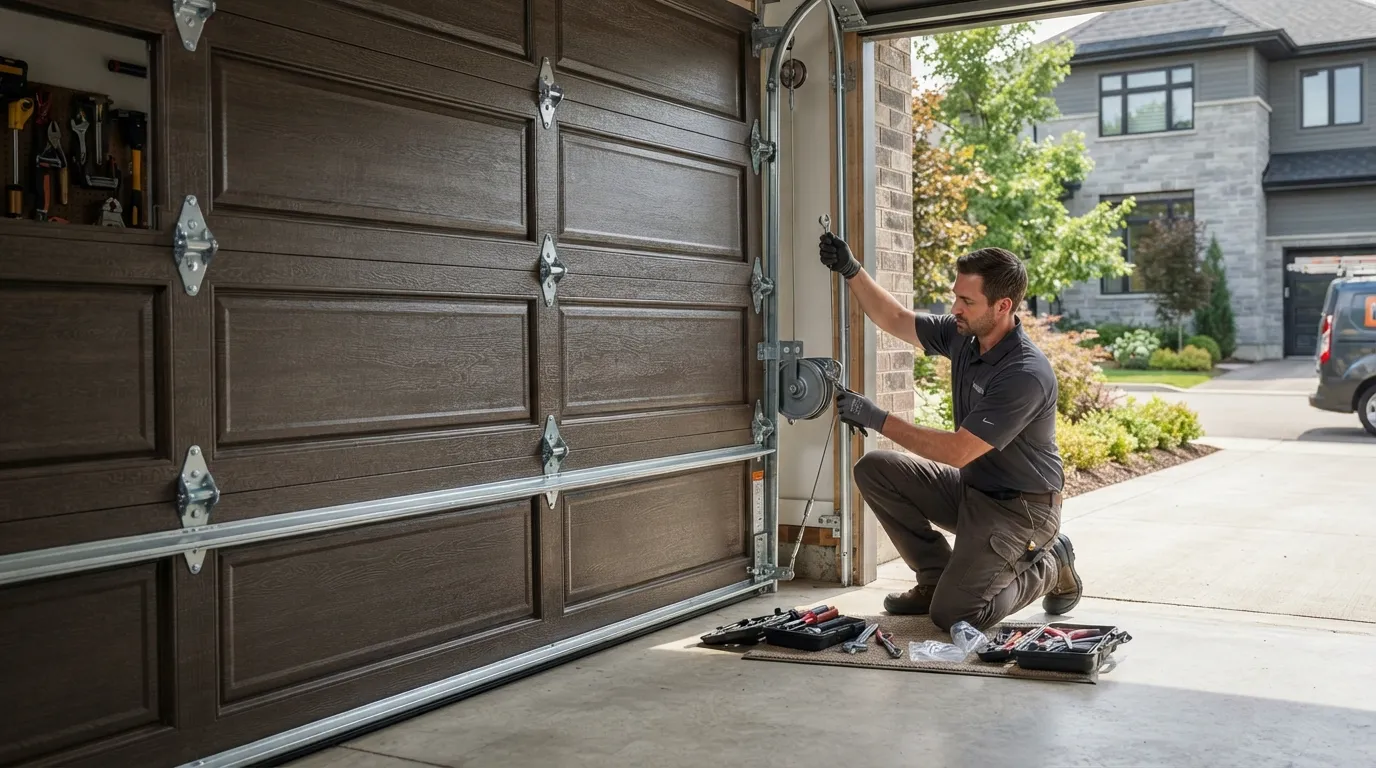
A house built around the area's 1969 median has likely never had its lift cables swapped, which means the drums, the bottom brackets, and sometimes the springs are the same age as the cable that just let go.
Mount Prospect, Skokie
Cable repair for Mount Prospect homes built around 1969. We travel the 10 miles from Skokie to replace snapped or frayed cables on original hardware.
Pricing
We don't quote a price here without seeing the door, because cable repair on a Mount Prospect garage almost always turns into a conversation about what else is original.
A house built around the area's 1969 median has likely never had its lift cables swapped, which means the drums, the bottom brackets, and sometimes the springs are the same age as the cable that just let go.
Replacing one cable on a door with corroded drums or a pitted bottom bracket costs more than the cable itself - you're paying to fix the thing that wore the cable out. We'll tell you on site whether you need a cable, a cable and a bracket, or a full spring-and-cable job, and we won't sell you the bigger job unless the hardware actually needs it.
The one thing we won't do is guess a number over the phone for a door we haven't looked at - too many of these houses have non-standard drums from decades of small repairs, and a phone quote on that kind of door is a guess dressed up as a price.
Symptoms
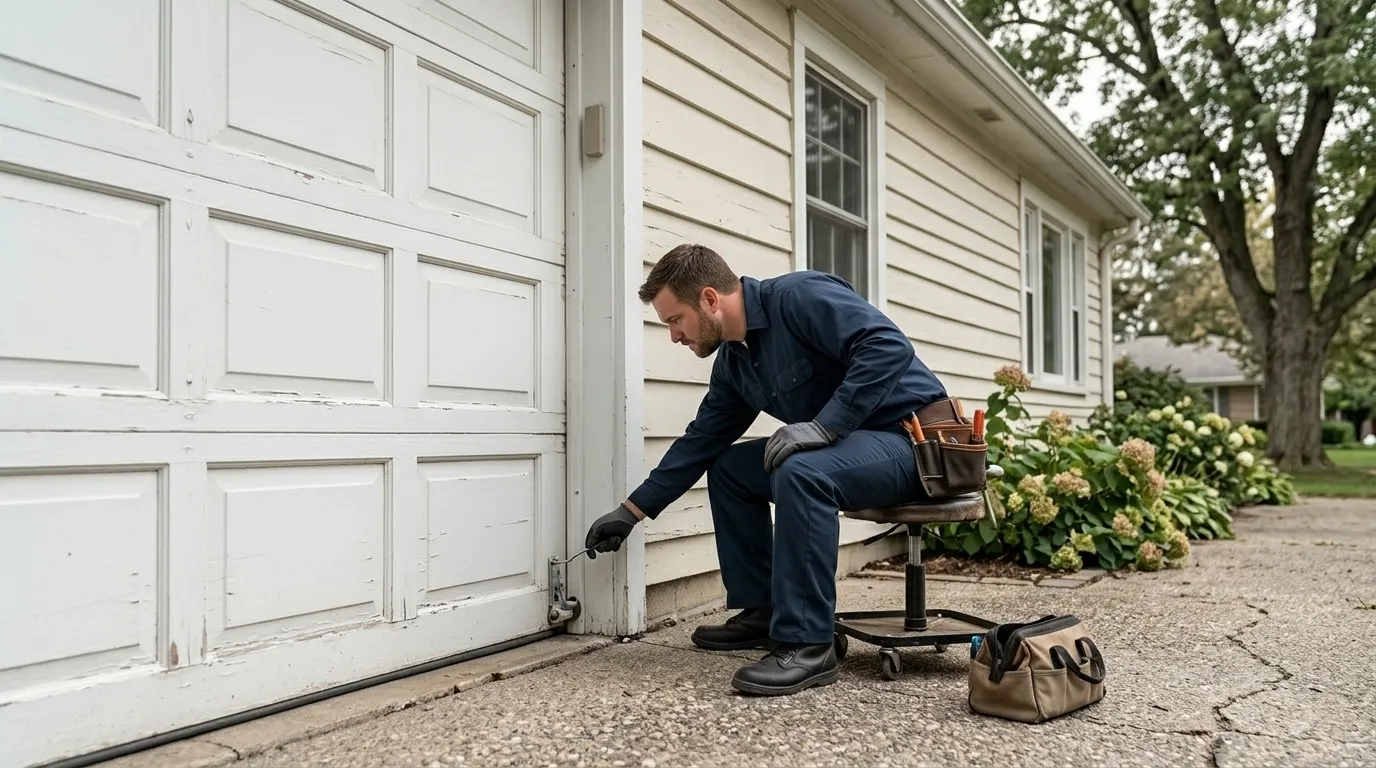
A frayed or snapped cable on a torsion or extension-spring door usually shows up the same way: the door drops unevenly, one side hangs lower than the other, or it stops a foot off the floor and won't move either direction.
Sometimes you'll hear a loud bang first - that's the cable letting go under spring tension, not the opener failing. On the older stock common through this part of the service area, cable failure is almost always corrosion or fatigue at the drum, not a one-time accident.
Cold winters here put moisture into the garage through melting snow off the car, and a cable that's been rusting quietly at the drum for years finally gives out on a January morning.
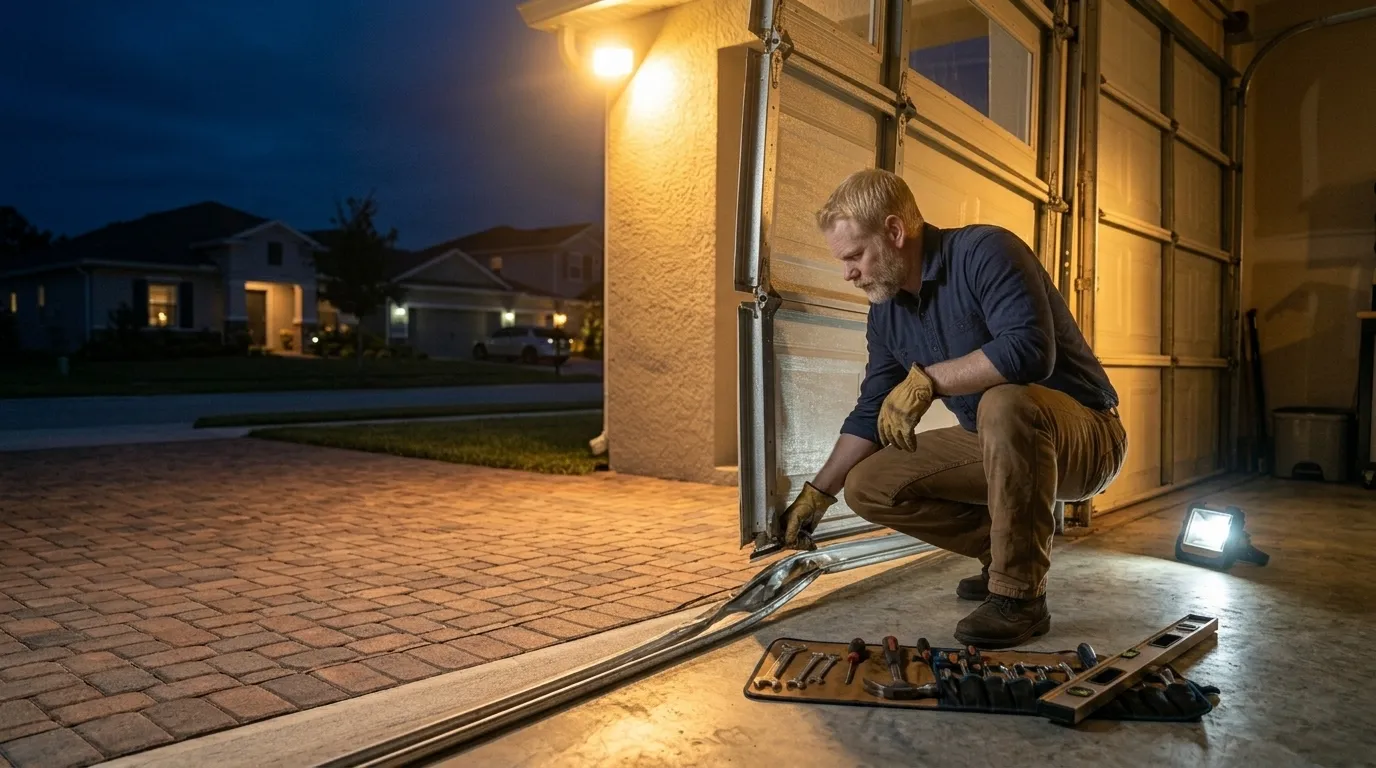
If your door is crooked in the frame or one cable looks visibly unwound from its drum, stop opening it. A door held by one cable can drop the rest of the way without warning, and that's a hand or a bumper under it.
DIY or pro
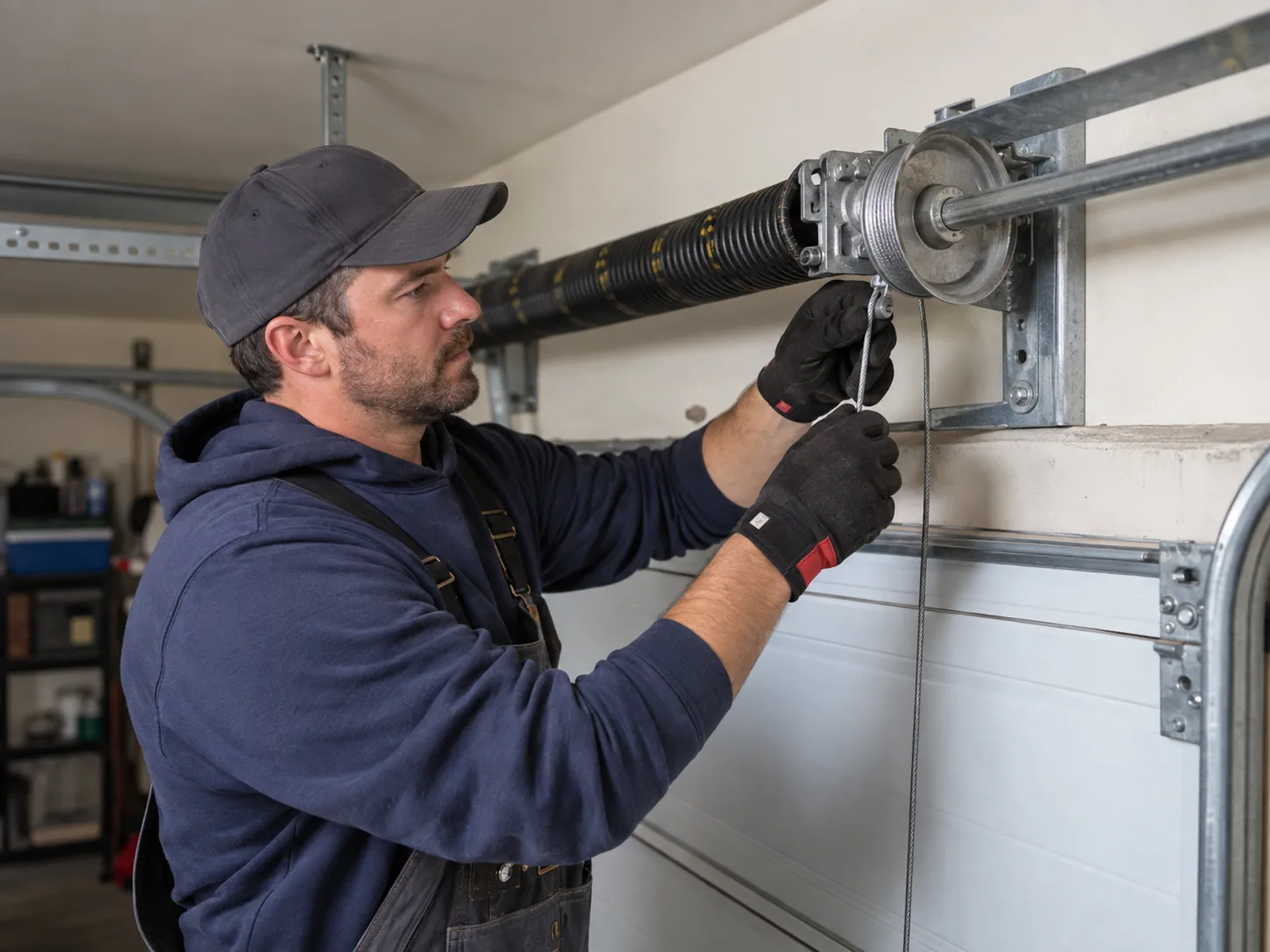
A snapped cable is not a spring - it's simpler mechanically, but it still sits under load from whatever spring system is on the door, and that's the part that hurts people.
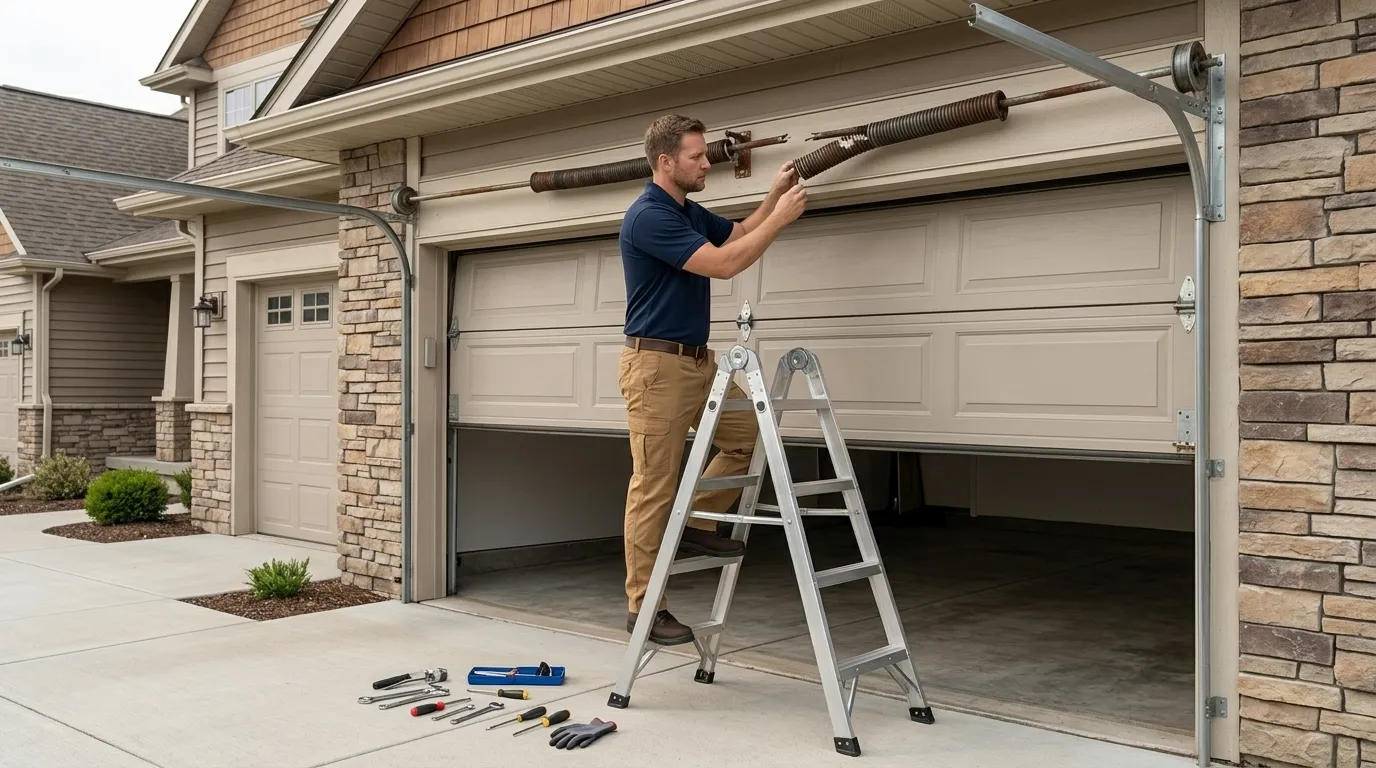
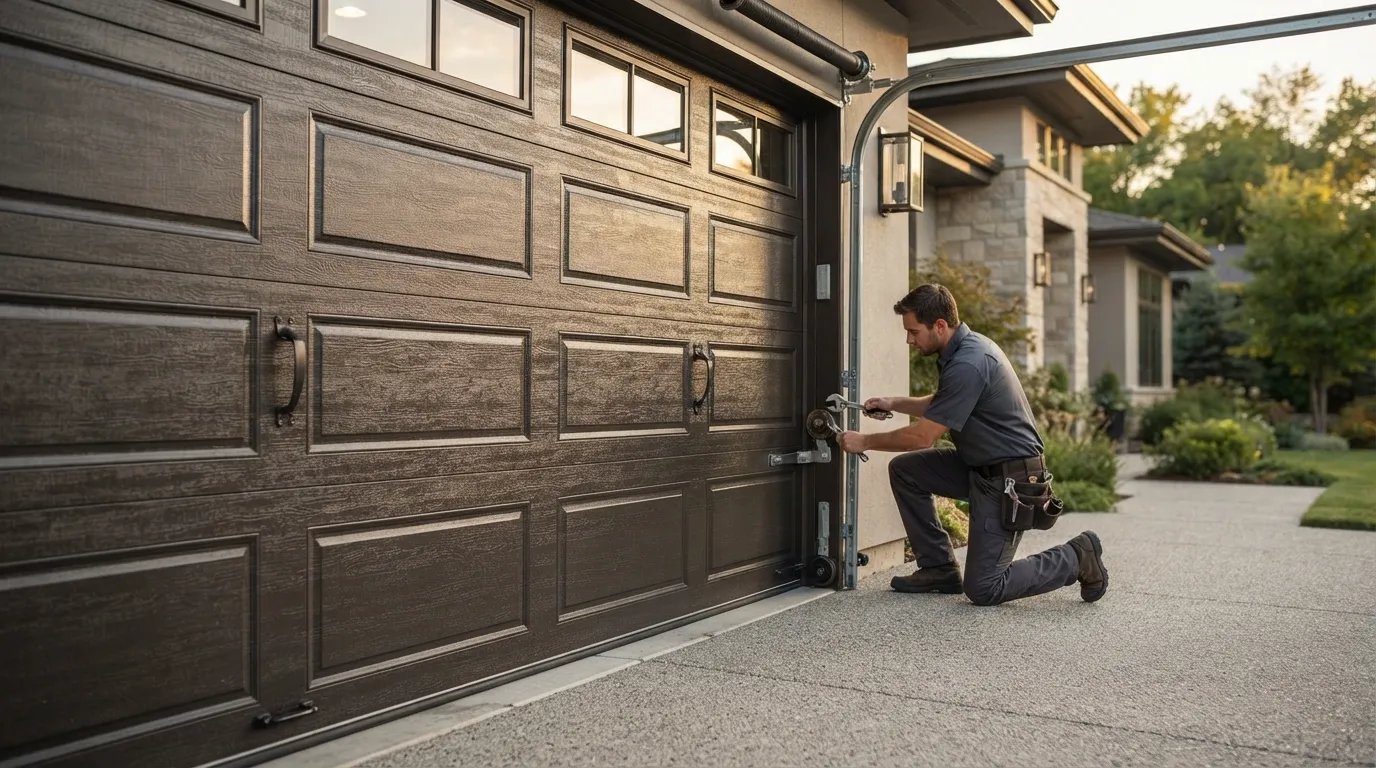
On extension-spring doors especially common in houses from the 1960s and 70s, the cable and the stretched spring are inches from each other, and releasing tension wrong sends the whole assembly whipping across the garage.
If you're comfortable with a clamp, a winding bar, and you already know how to unload a torsion spring safely, a cable swap on a standard door isn't beyond a handy homeowner. If you don't already know how to do that, this isn't the repair to learn on.
The honest limit here: we don't walk people through spring-loaded cable jobs over the phone, because the failure mode is a broken hand, not a broken door, and that's not a repair we'll talk anyone into doing alone.
Job timing
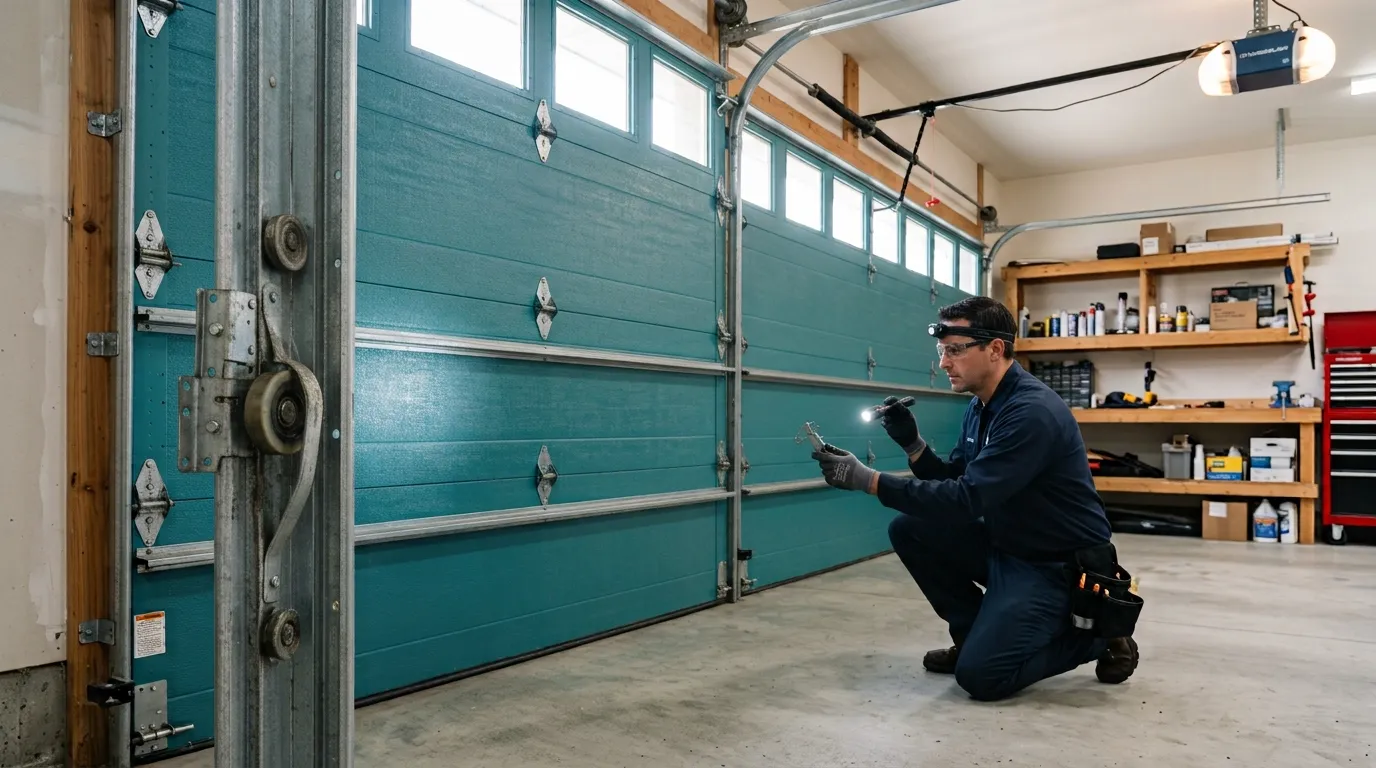
A straightforward cable replacement on a torsion door, once we're on site, usually runs under an hour - cut the old cable free under safe tension, run the new one, reset the drum, check both sides for even pull. Where it runs longer is exactly where this housing stock tends to bite: original drums that have to be swapped because they're grooved or seized, or a bottom bracket that's rusted to the track and needs to come off in pieces. Since we're coming from Skokie, about 10 miles out, we plan the trip around having the likely parts for a door of this era already on the truck - cables, standard drums, common bottom brackets - rather than diagnosing on site and coming back a second day. That said, if a door turns out to need a part we don't carry as standard stock, we'll tell you that up front rather than start a job we can't finish that visit.

Watch-outs
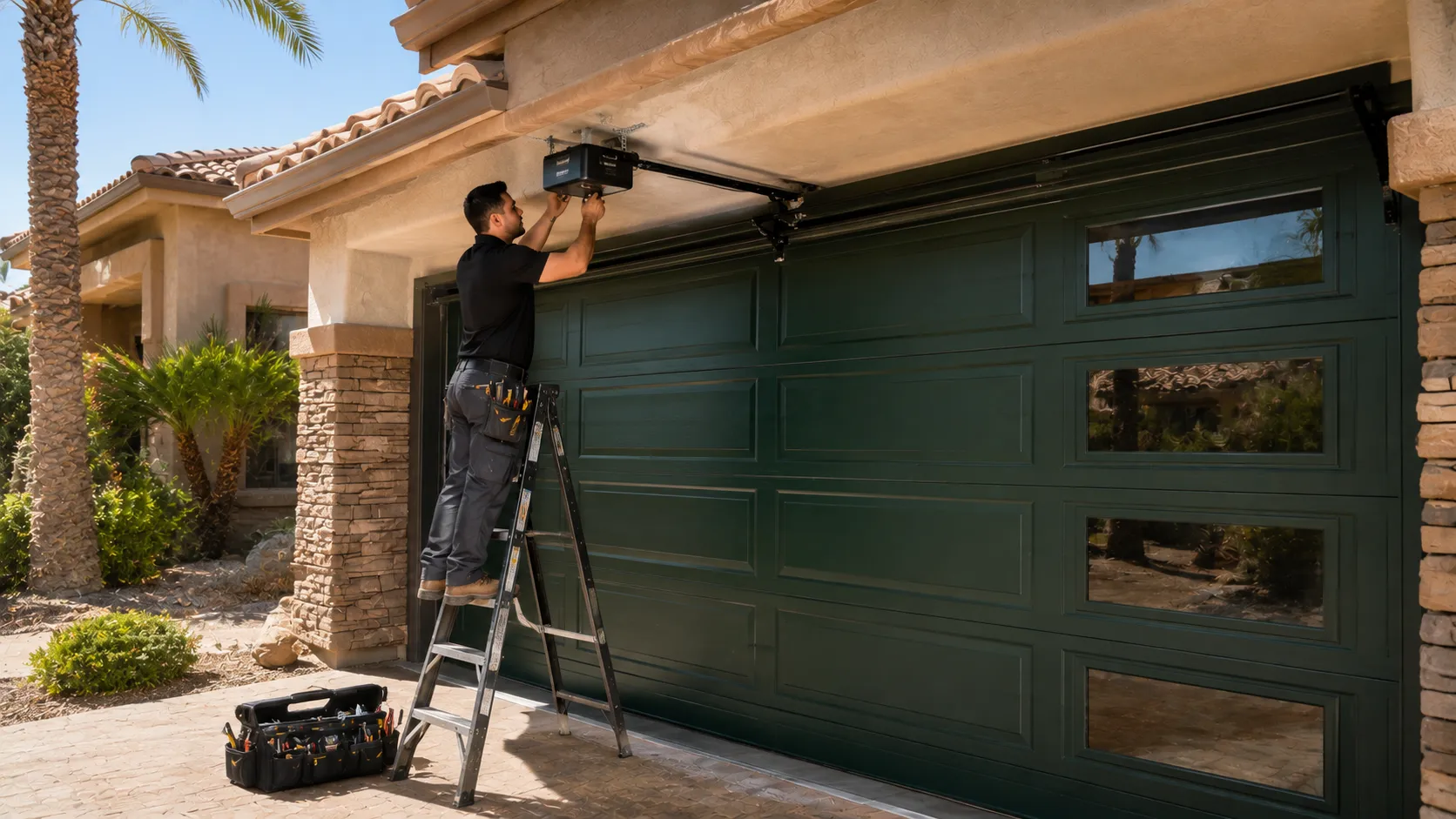
The biggest risk on a cable job in this area isn't the cable - it's what the cable was hiding. On a door where the cable has been slowly stretching or fraying for a year or more, the opener has often been compensating, straining the motor or gears to pull a door that's really being held by one working cable. Replace the cable and the door works, but the opener may already be worn from months of uneven load. We've also seen extension-spring doors on original hardware where the pulley the cable runs through is rusted enough to cut a new cable within months if it's not replaced at the same time. And on any door where one cable snapped, the other one is the same age and under the same stress - we'll always check it, because a second failure a few weeks later is common enough that we won't leave a matching original cable in place without a look.
Questions
That's almost always one cable failing while the other still holds tension, which pulls the door off level. On houses built around the local median of 1969, it's usually the original cable finally giving out from age and corrosion, not something that happened suddenly from use.
We stock the cables, standard drums, and common bottom brackets that fit doors from the area's typical 1960s-70s build era. If a door needs a part outside that range, we'll tell you on site rather than guess.
The cable itself isn't under tension the way a spring is, but on most doors the spring is still loaded when a cable snaps, and releasing that safely takes the right tools and know-how. We don't recommend doing this one alone if you haven't unloaded a spring before.
About 10 miles. We don't run a branch in Mount Prospect, so we plan the truck's stock for the trip rather than diagnosing and returning a second day.
Explore more
Ready when you are
Skokie Garage Door Pros repairs and installs garage doors, springs and openers in Skokie, IL and the surrounding area.