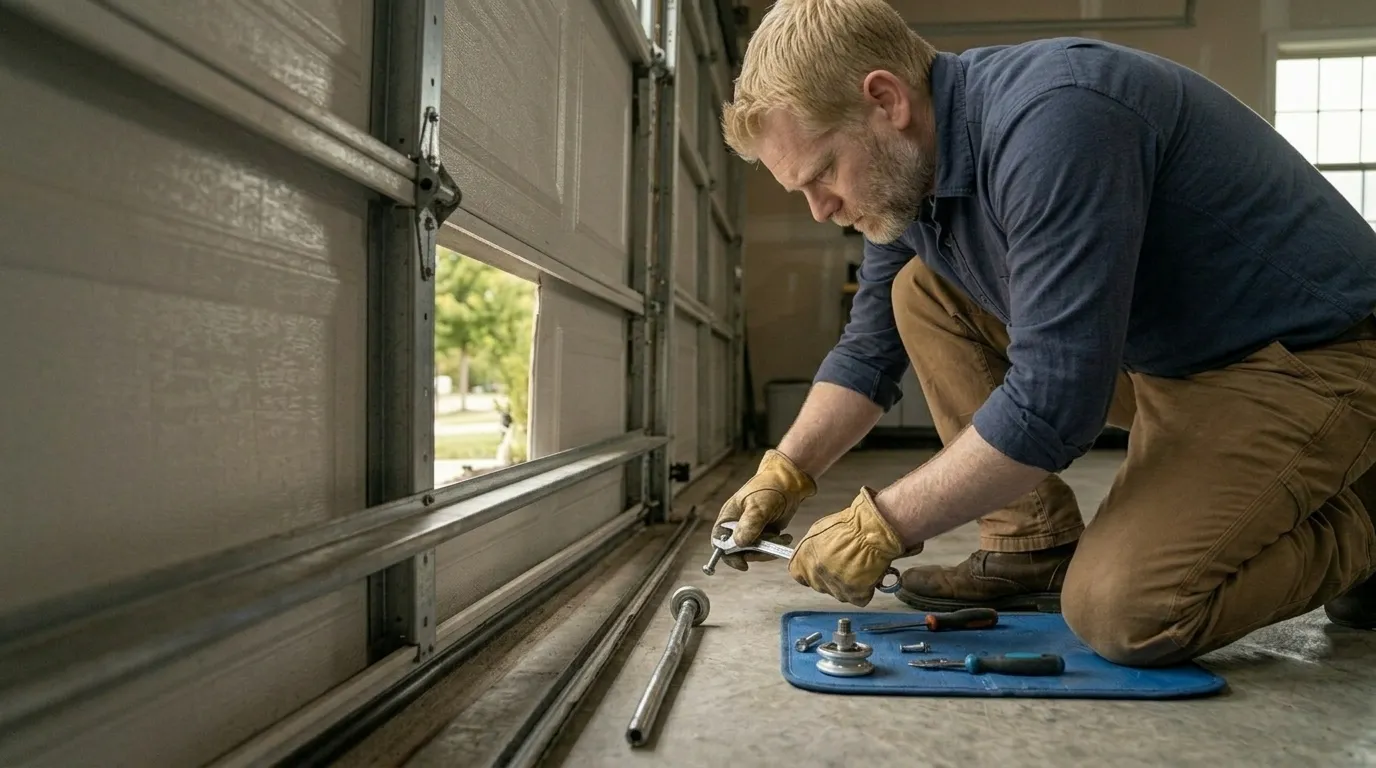
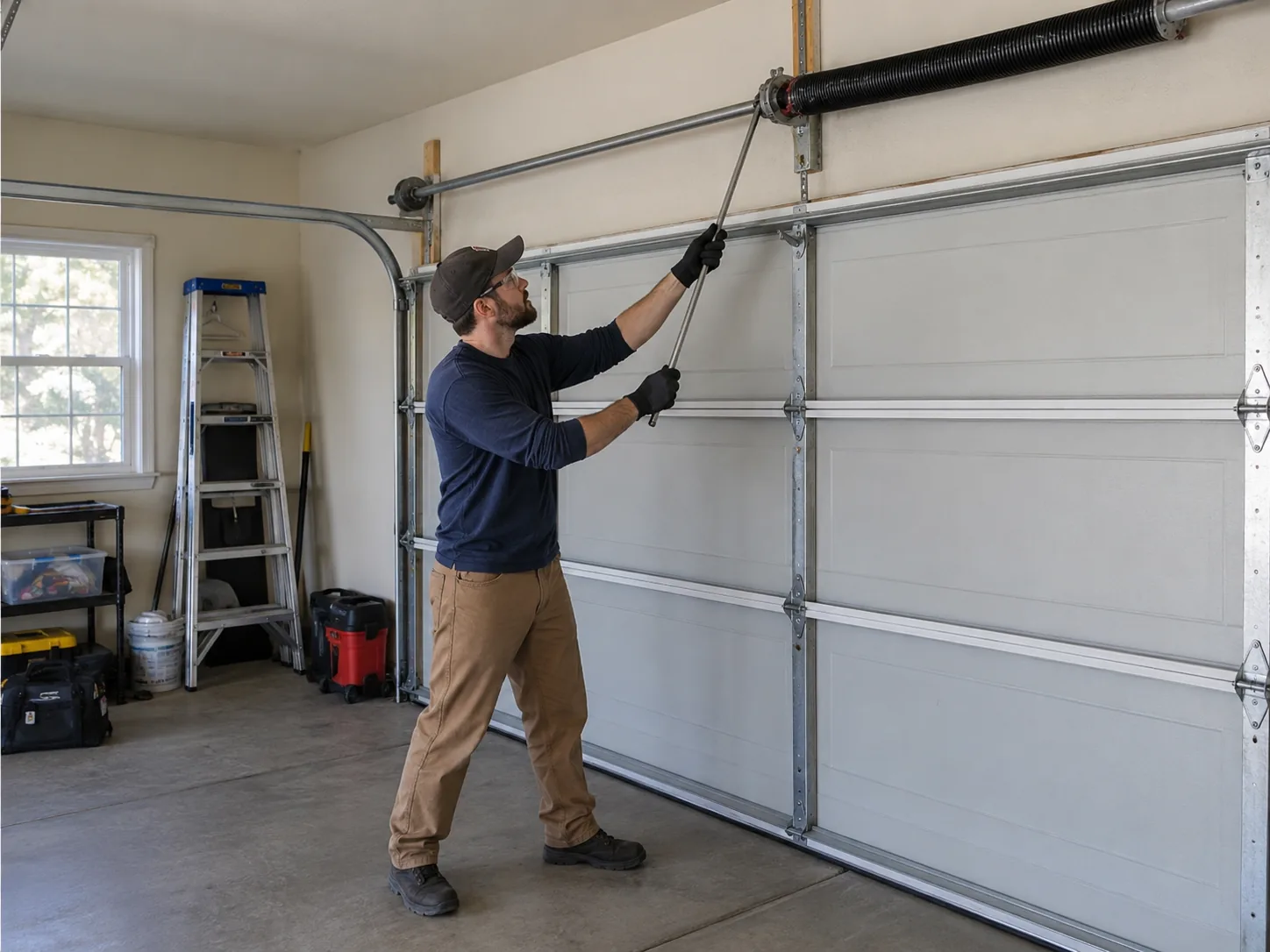
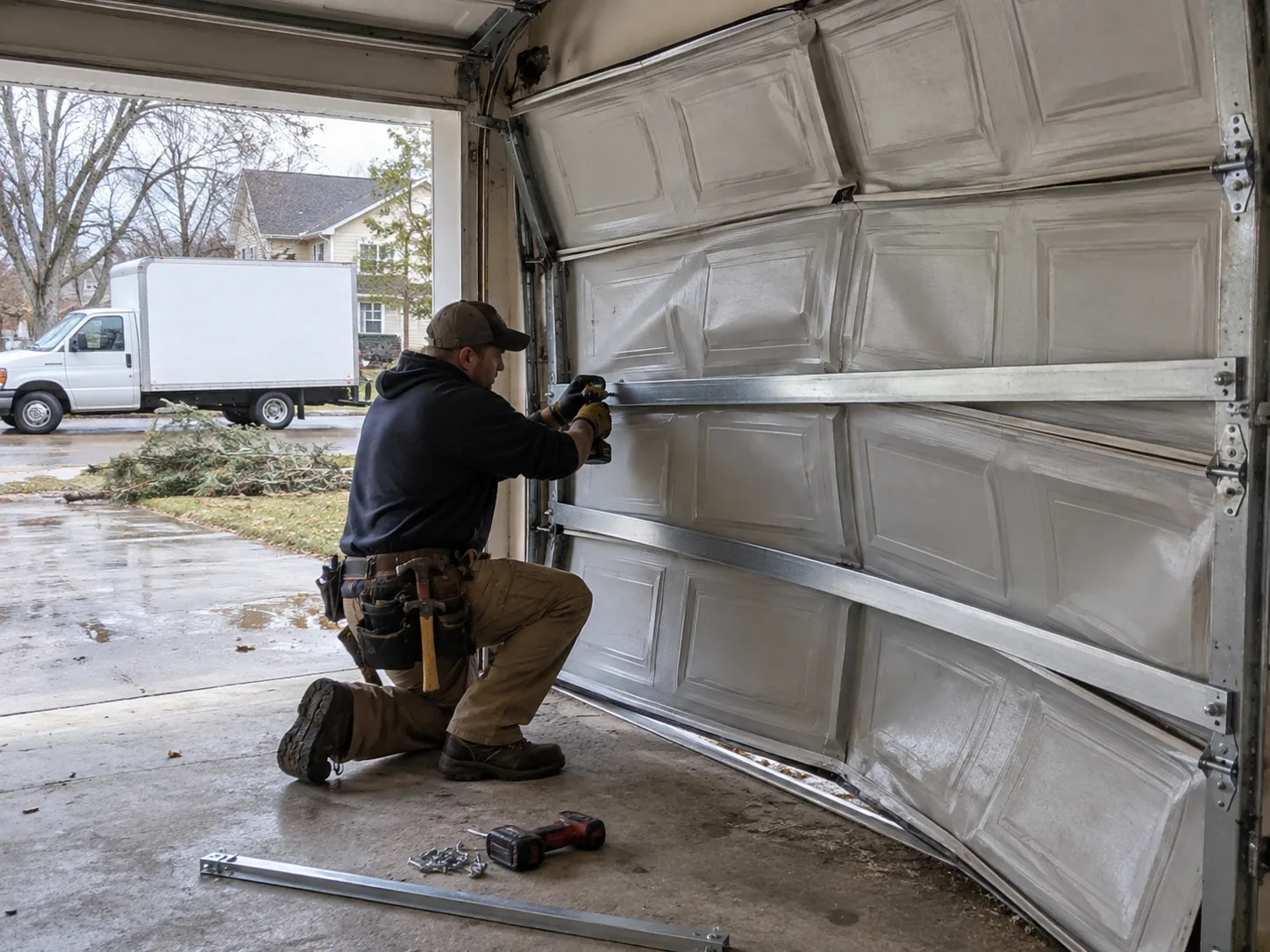
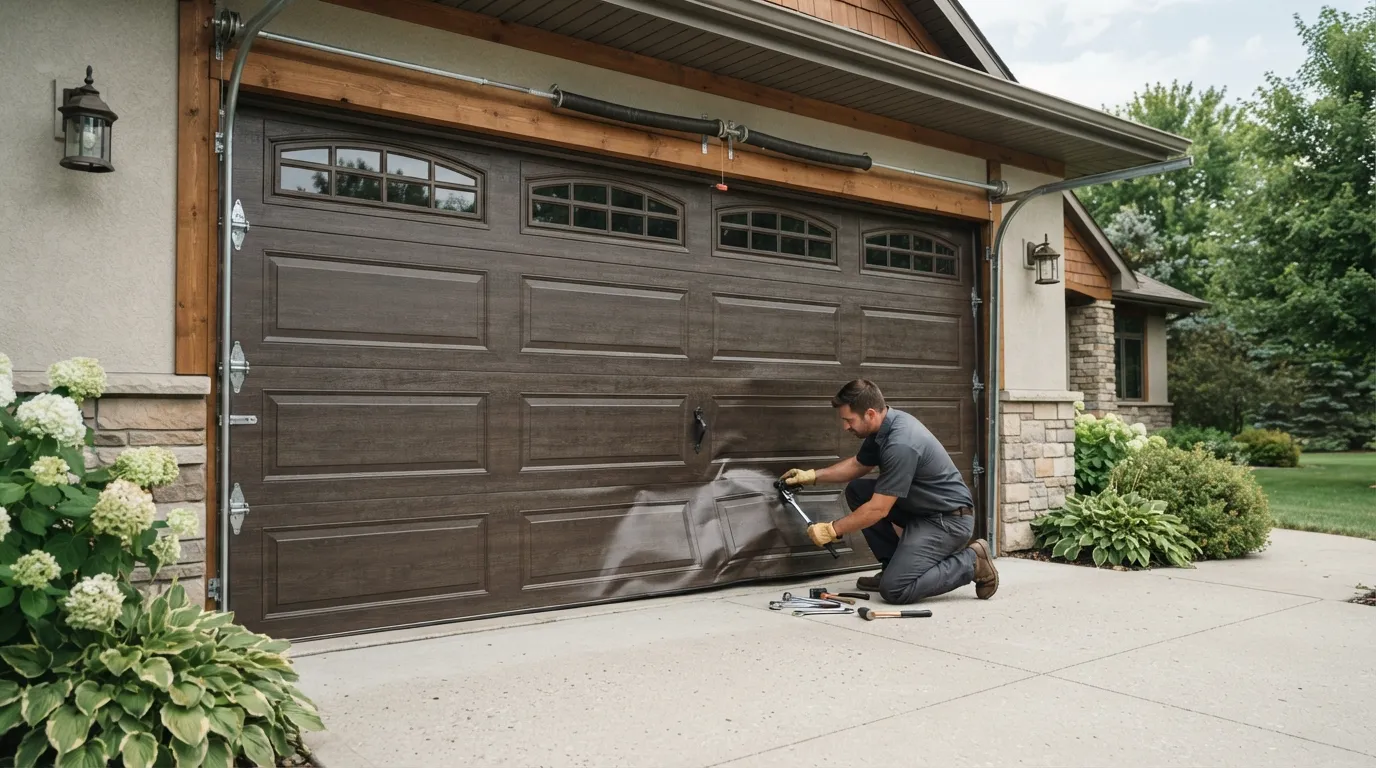
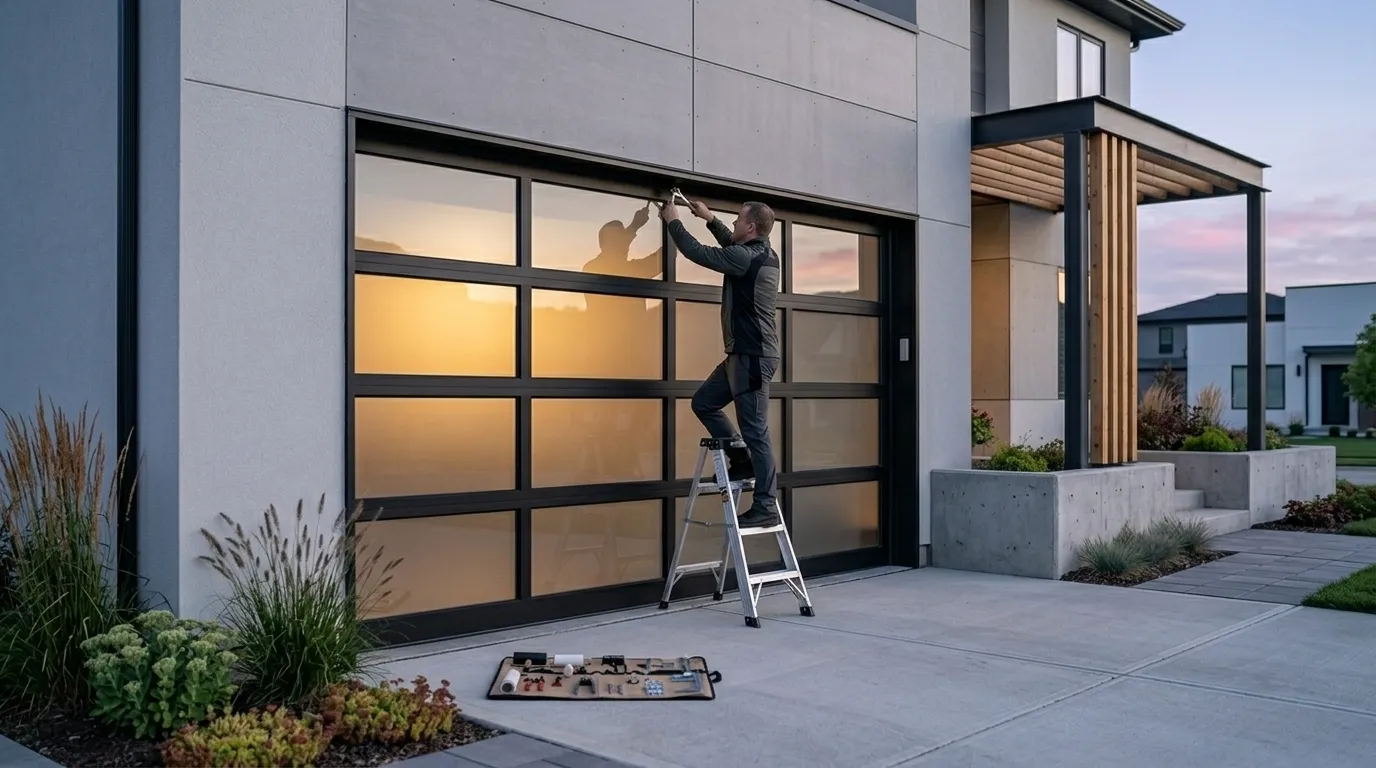
Most of the housing in this service area went up between 1938 and 1994, with a lot of it clustered in the 1960s and 70s, and across the 64 named areas we cover that's the dominant story - garages built to a code and a hardware standard from decades ago, not to what's sold today. Doors from that era typically shipped with plain steel rollers on unsealed bearings, and a lot of those originals are still in service because nobody thinks about rollers until they're loud.
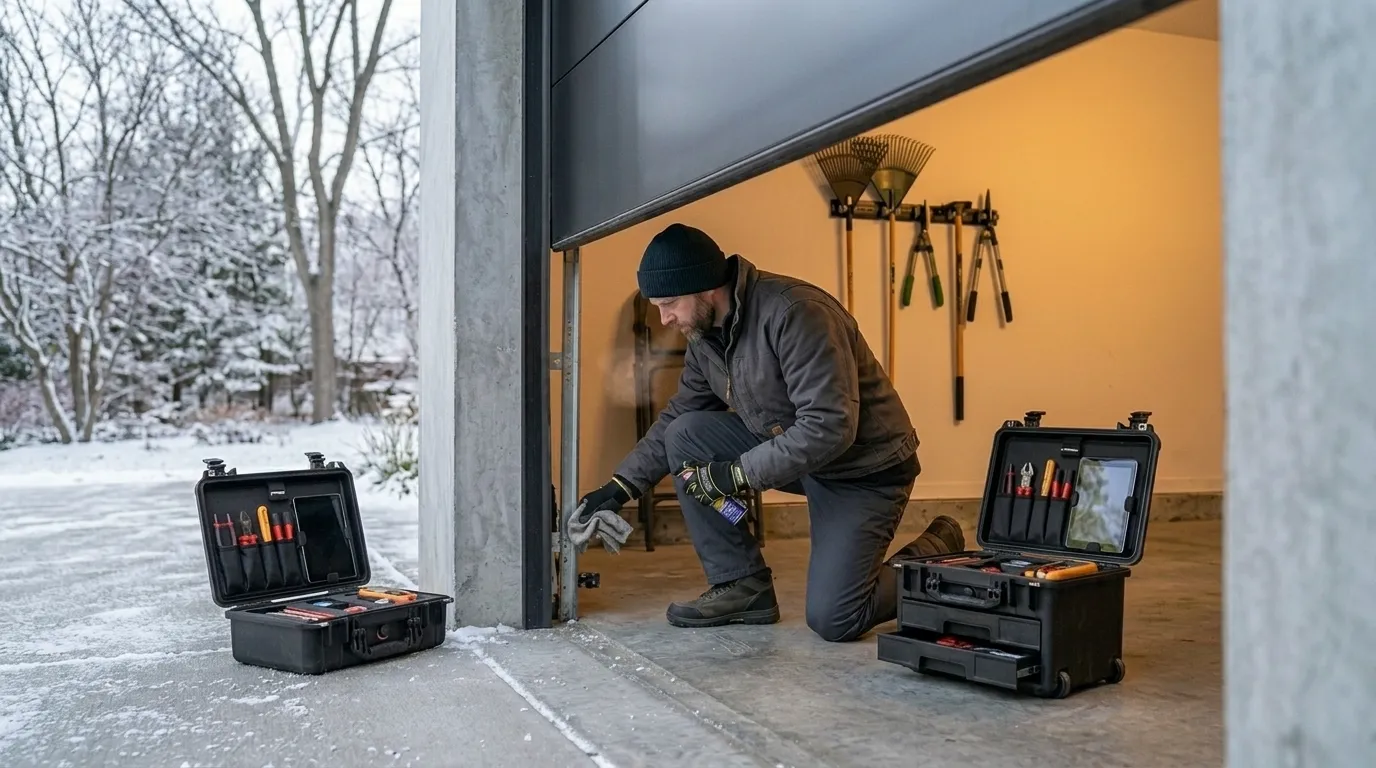
Cold matters here too. This is a moderate-cold climate band, and steel rollers on old bearings stiffen up in winter, then get worked hard as the door cycles through freeze-thaw swings during the shoulder seasons. That stiffening accelerates wear on the roller and the stem, and it's why roller failures cluster in late fall and early spring rather than midsummer.
The other factor is simple age math: a door installed when the house was built in the 1960s has had sixty-plus years of cycles on hardware that was never meant to last that long. Roller replacement on a door that old isn't a sign anything was done wrong - it's the hardware reaching the end of a normal service life.