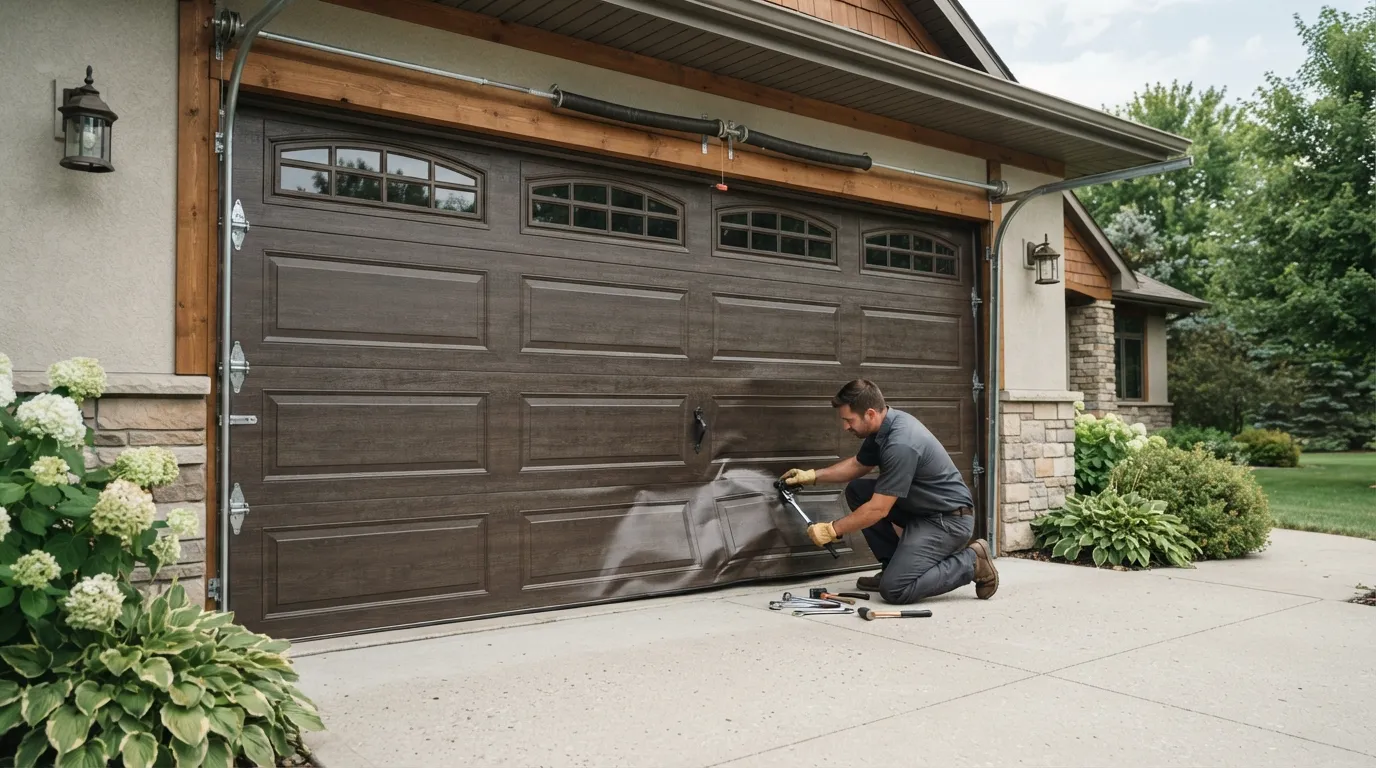
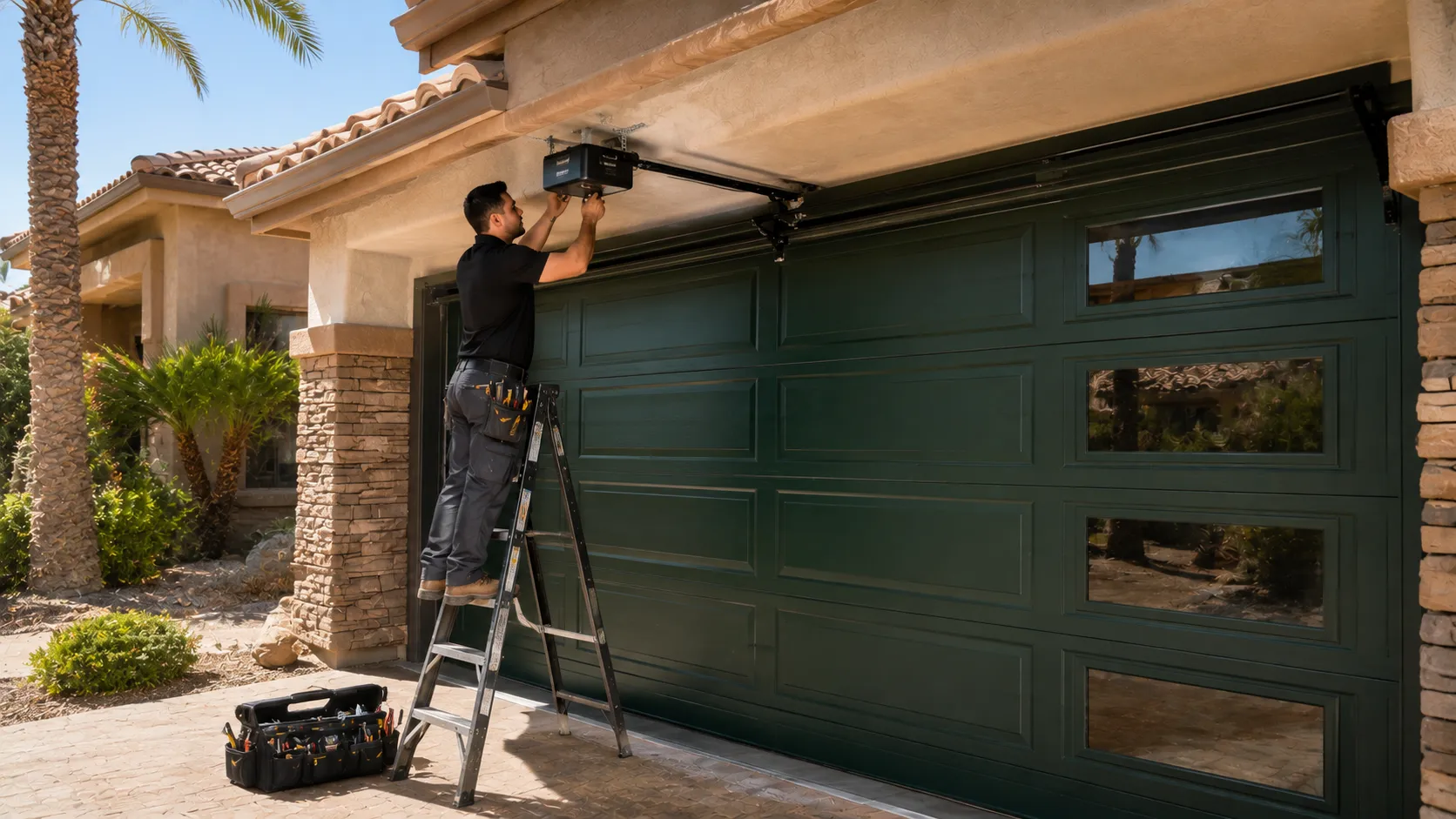
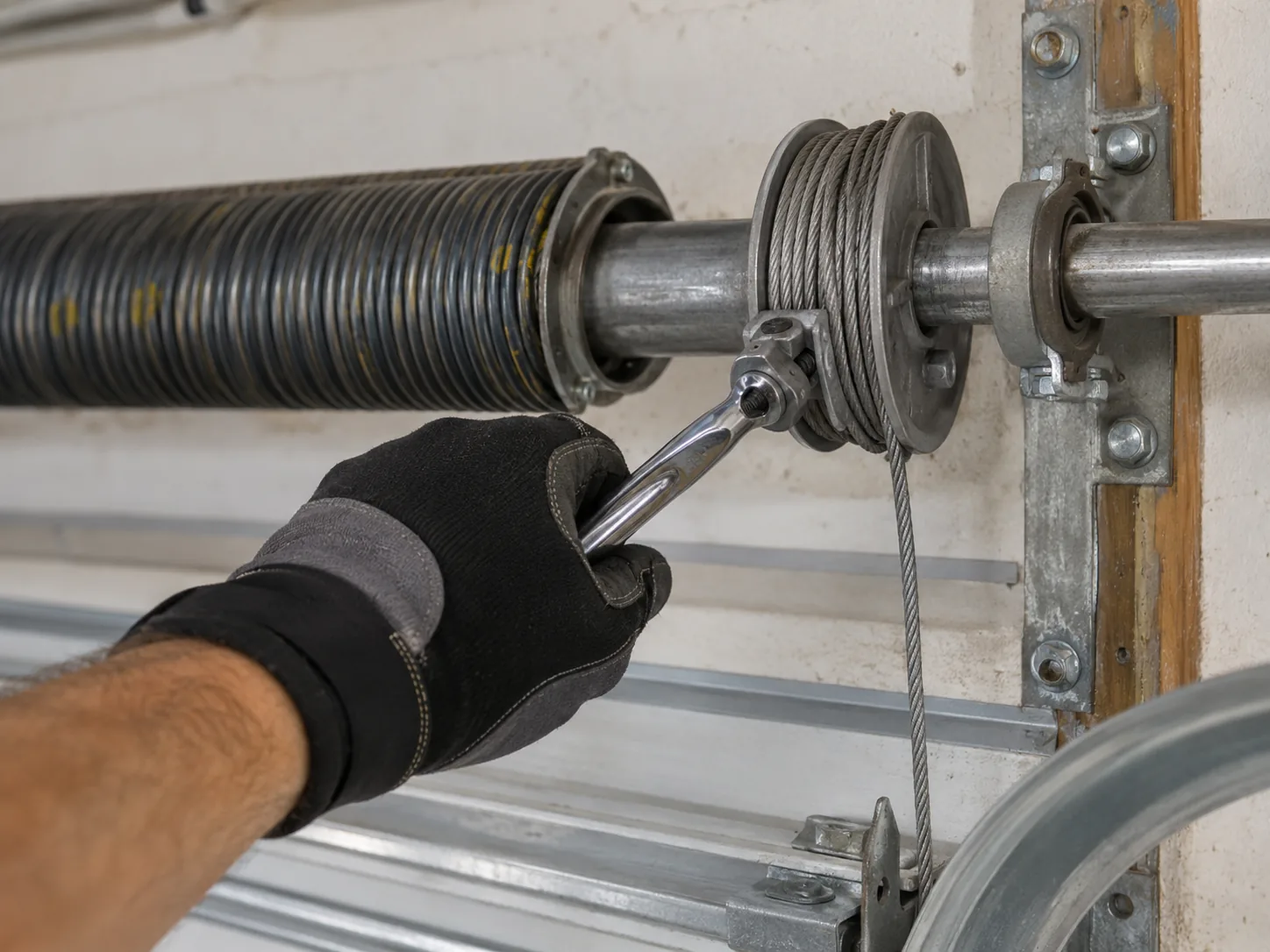
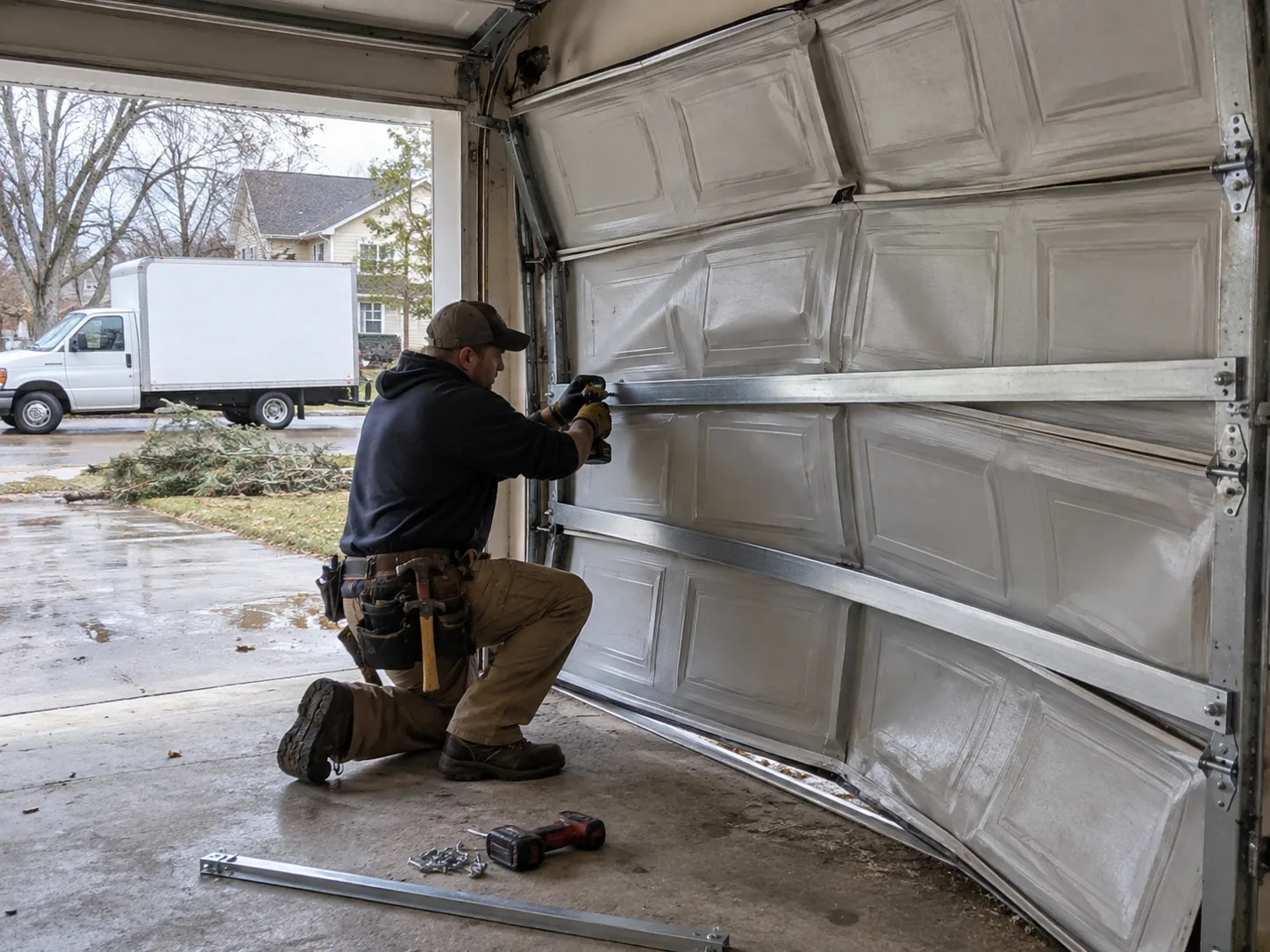
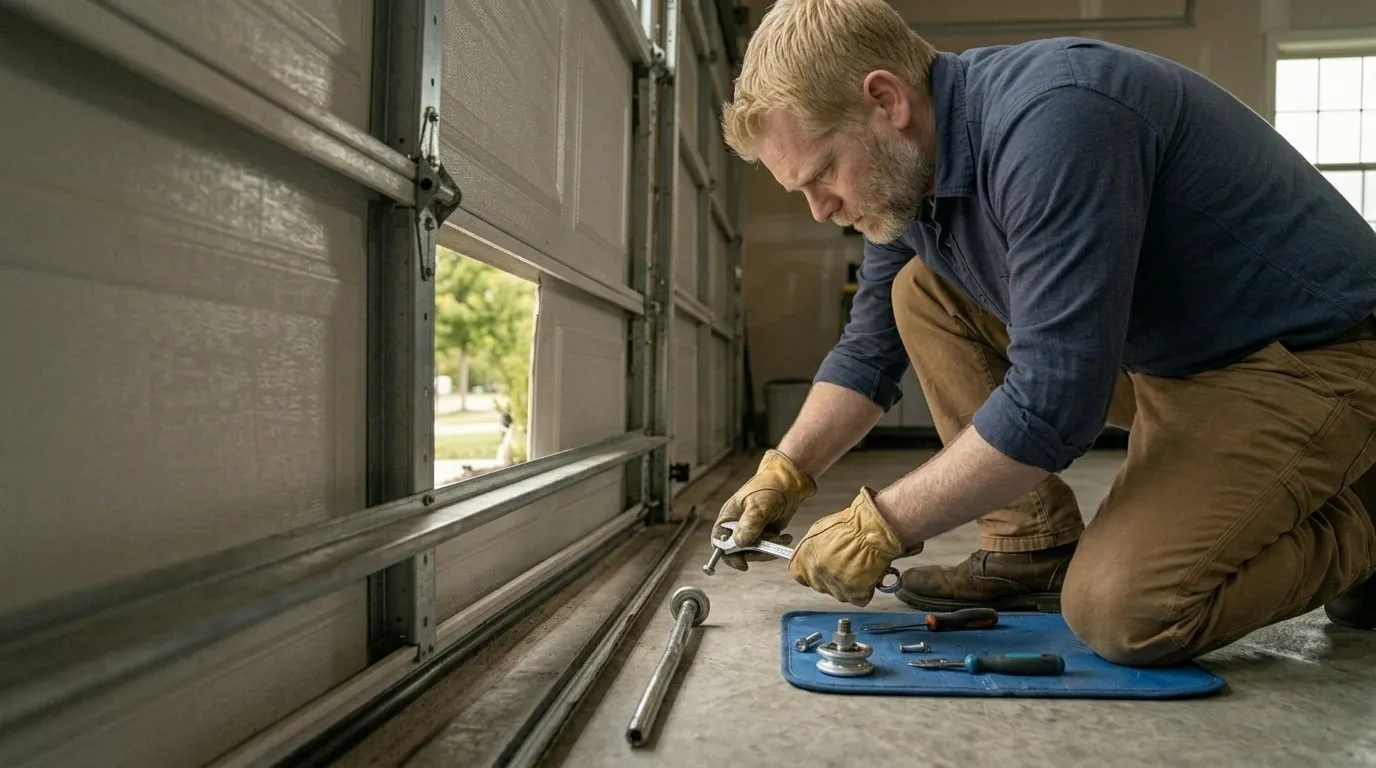
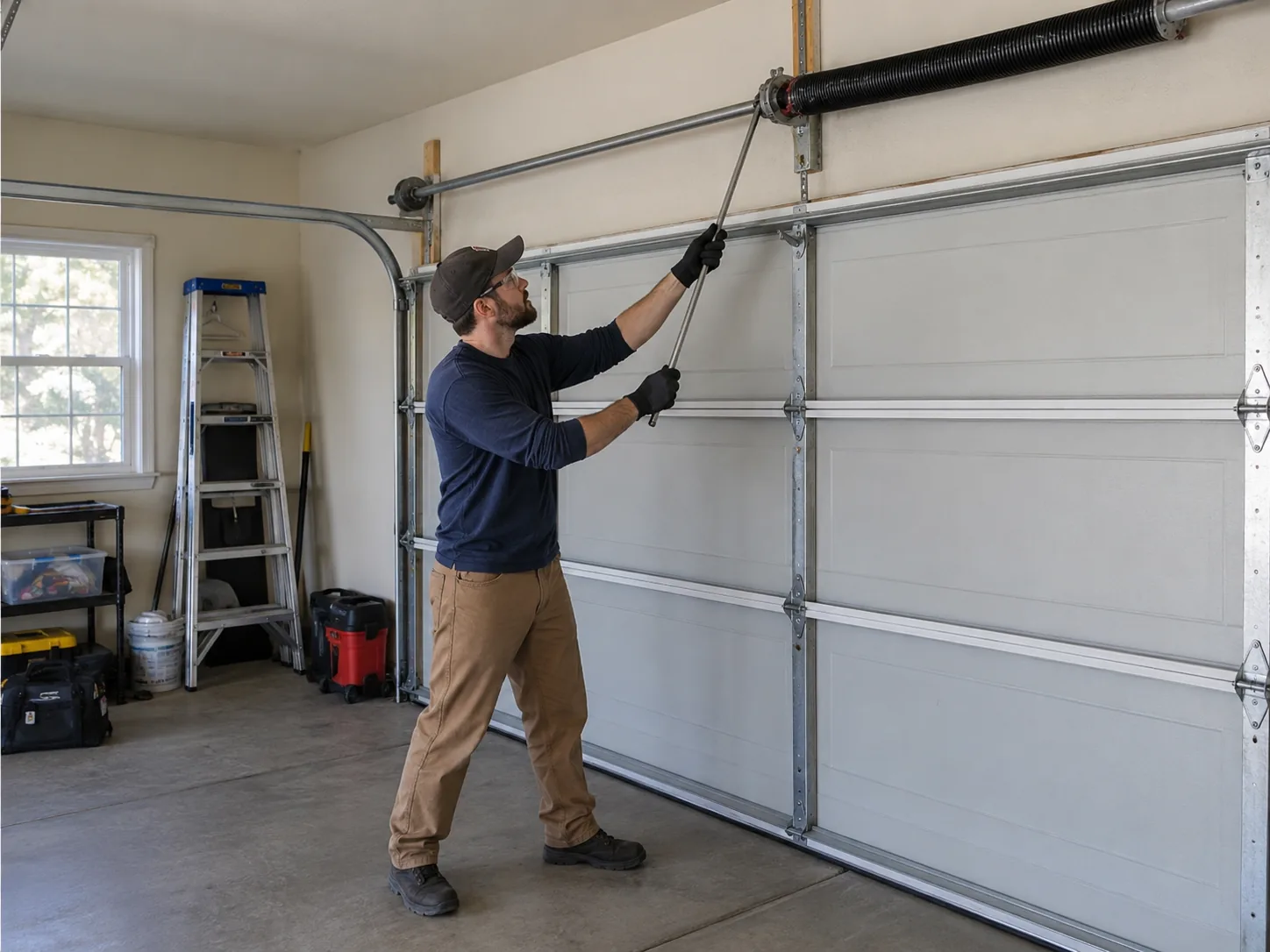
Housing and commercial buildings across this part of the Chicago area mostly went up between 1938 and 1994, with the bulk of it dating to the 1960s and '70s. Doors, openers, and track hardware installed or replaced during that build-out window are now well past their expected service life, and that shows up in commercial bays the same way it shows up in home garages: springs that have simply cycled out their rated life, and hardware sized to specs nobody stocks off the shelf anymore.
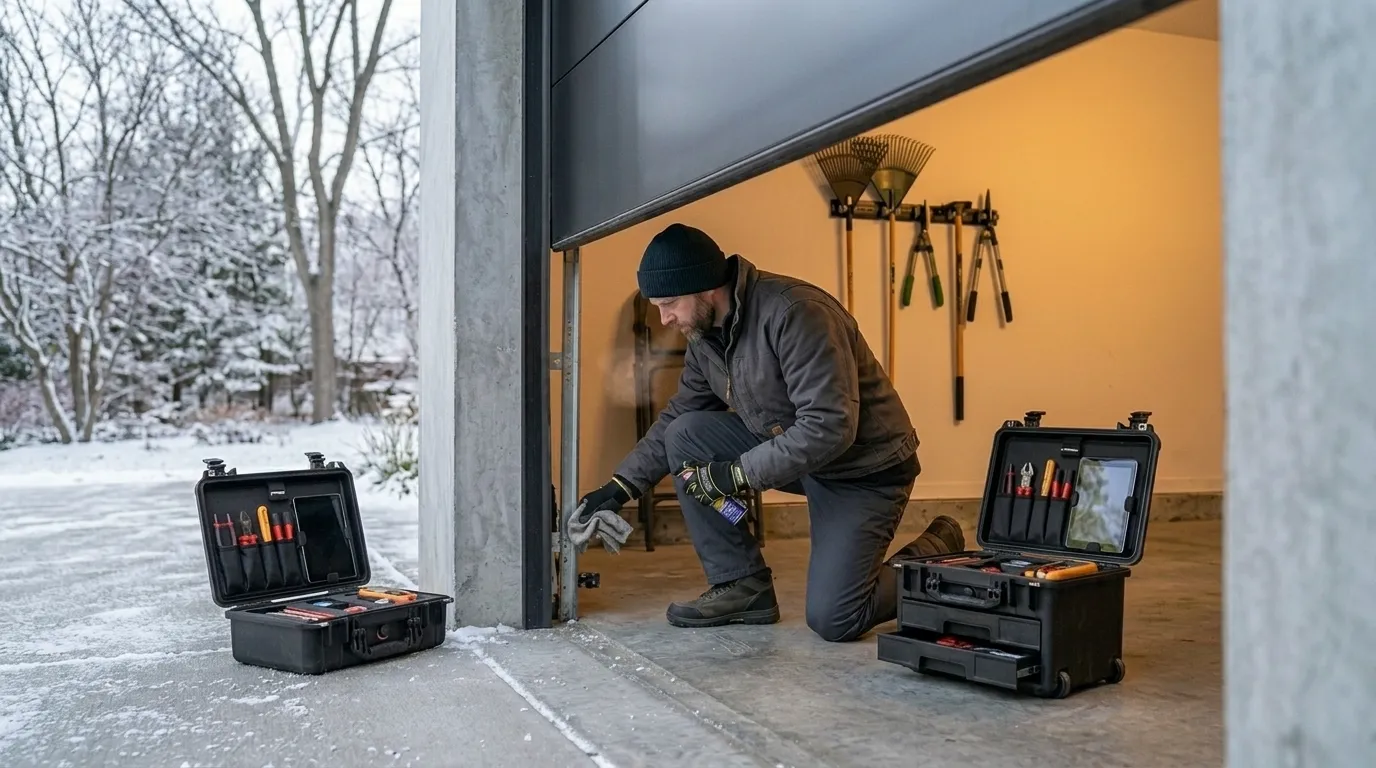
Add the climate. This is a cold-moderate band - real winter, real temperature swings between seasons - and steel expands and contracts with every one of them. A track bolted flush in August can bind by January. Nylon rollers that were fine all summer get brittle and start chipping in a hard freeze. Commercial doors, cycled dozens of times a day, feel that stress faster than a residential door that opens twice.
We run calls across a service area that spans towns like Golf, three miles out, Niles at four miles, Kenilworth also four, Winnetka at five, and out to Rosemont at eight and Mount Prospect at ten - 325,582 households in the broader area, which means a lot of buildings built in that same narrow window, aging on the same schedule, hitting the same failure points at close to the same time.