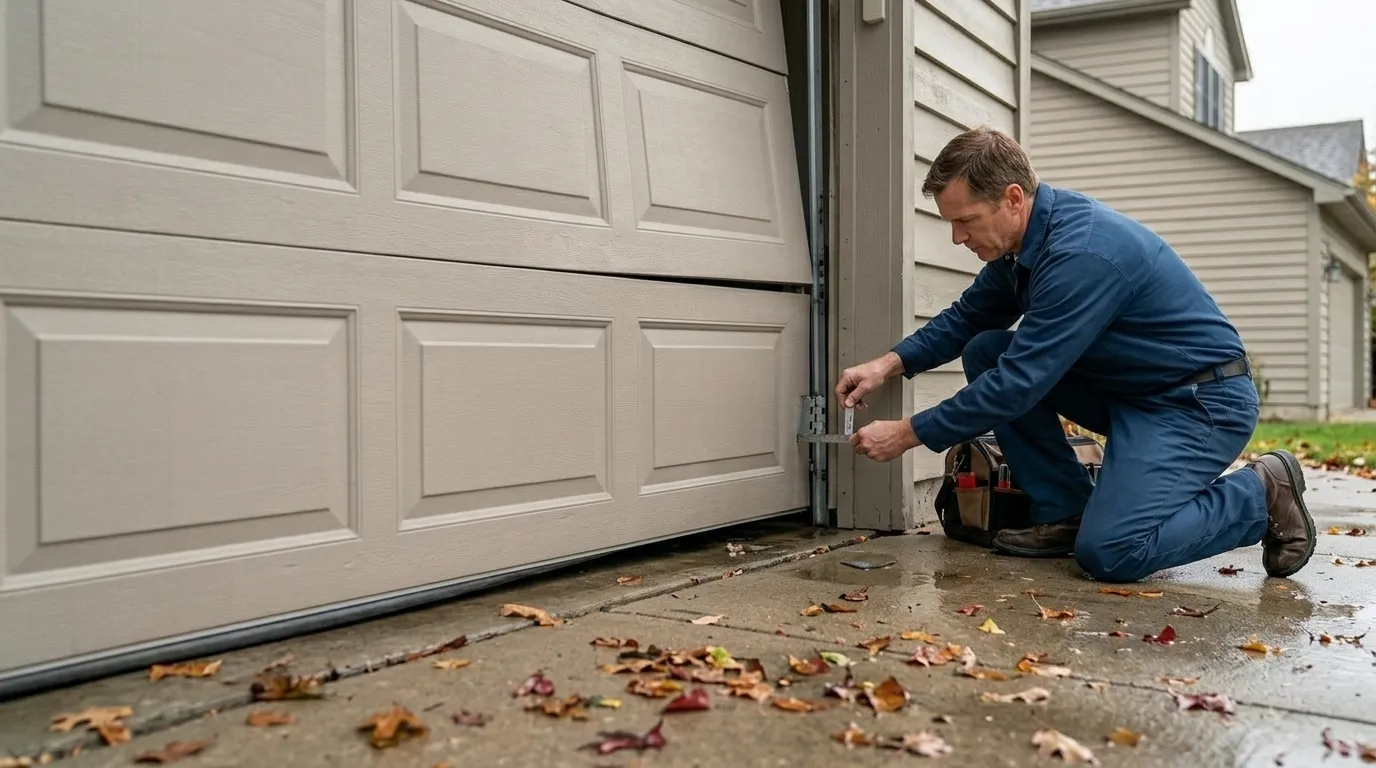
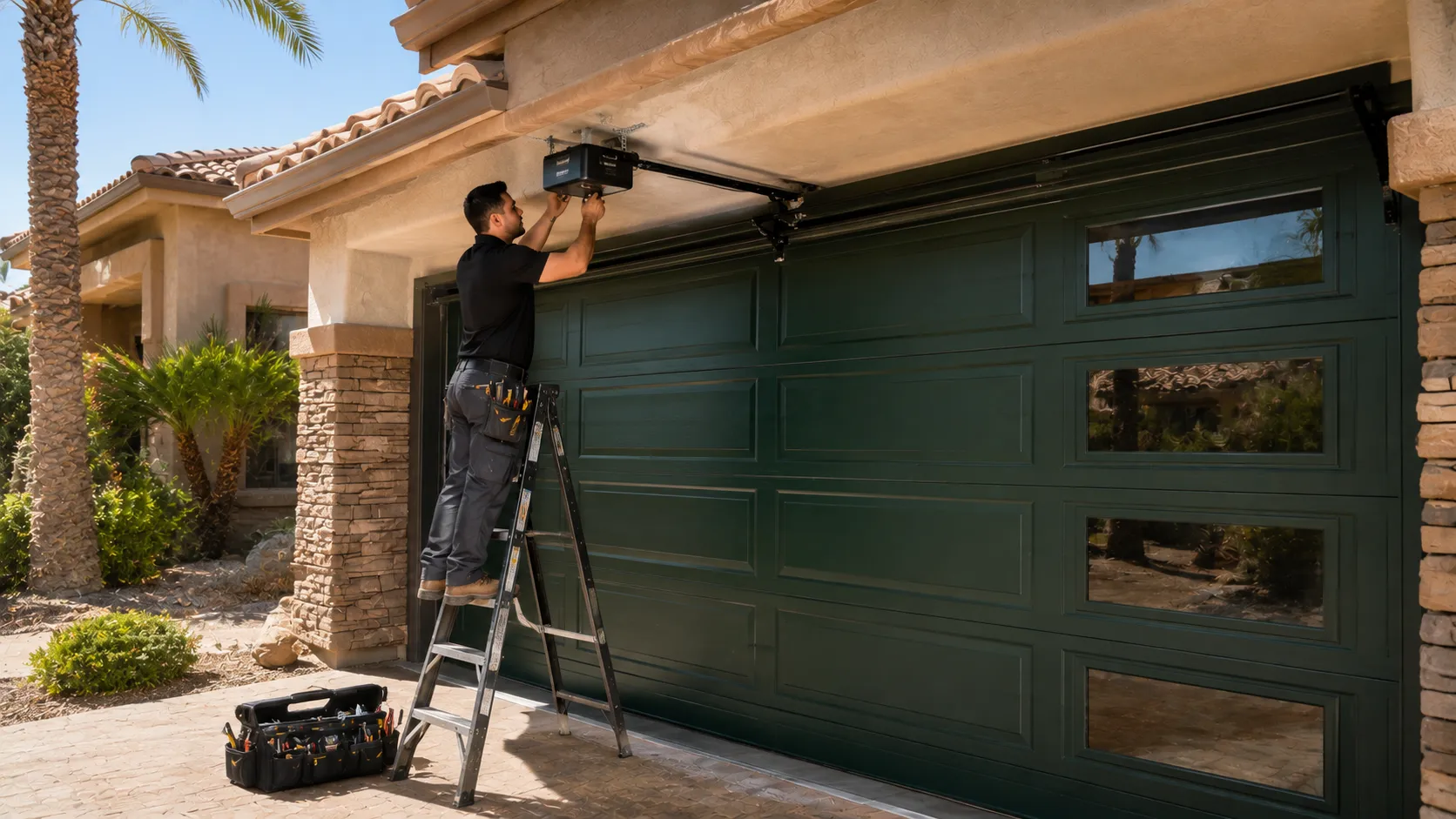
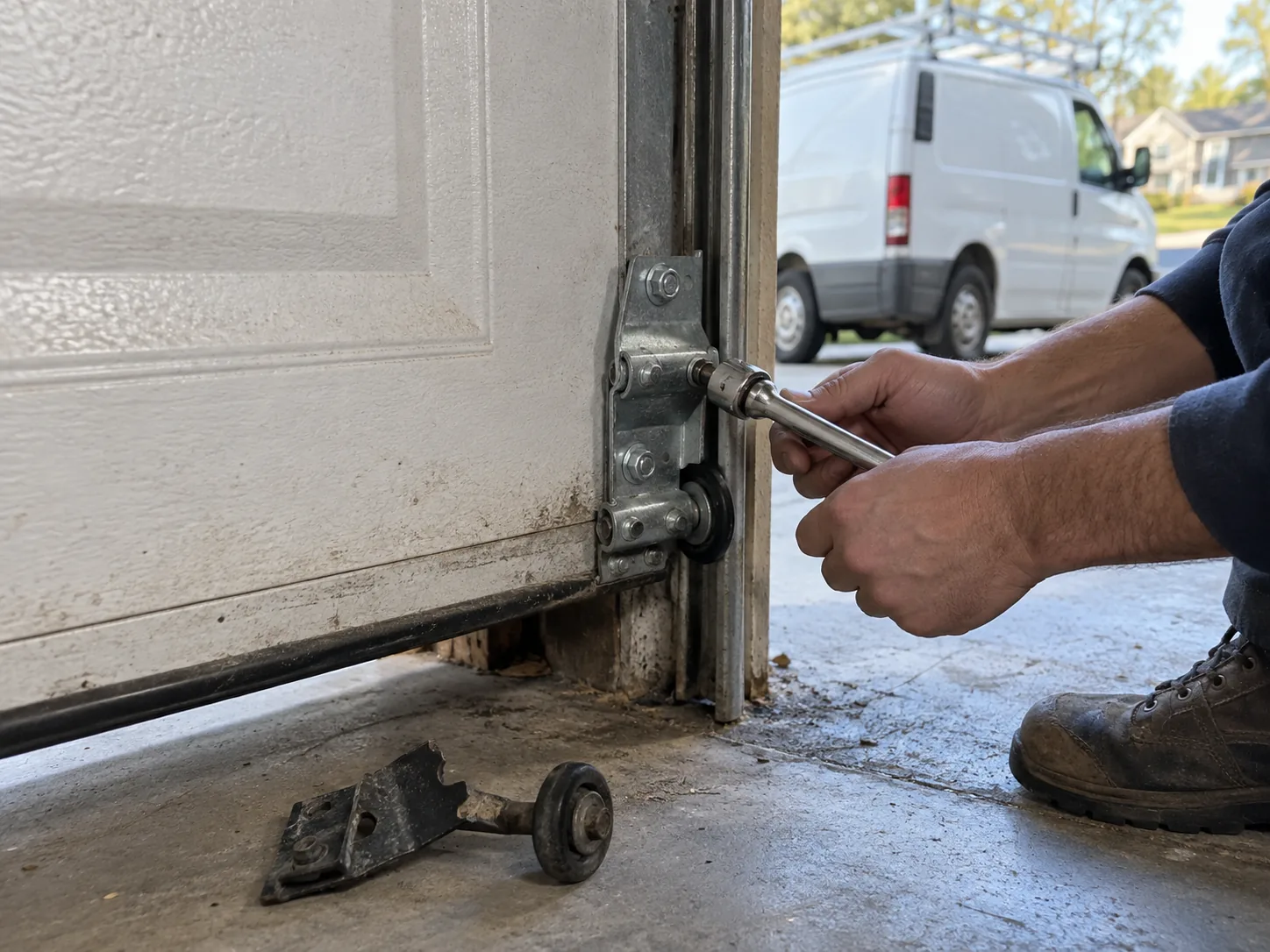
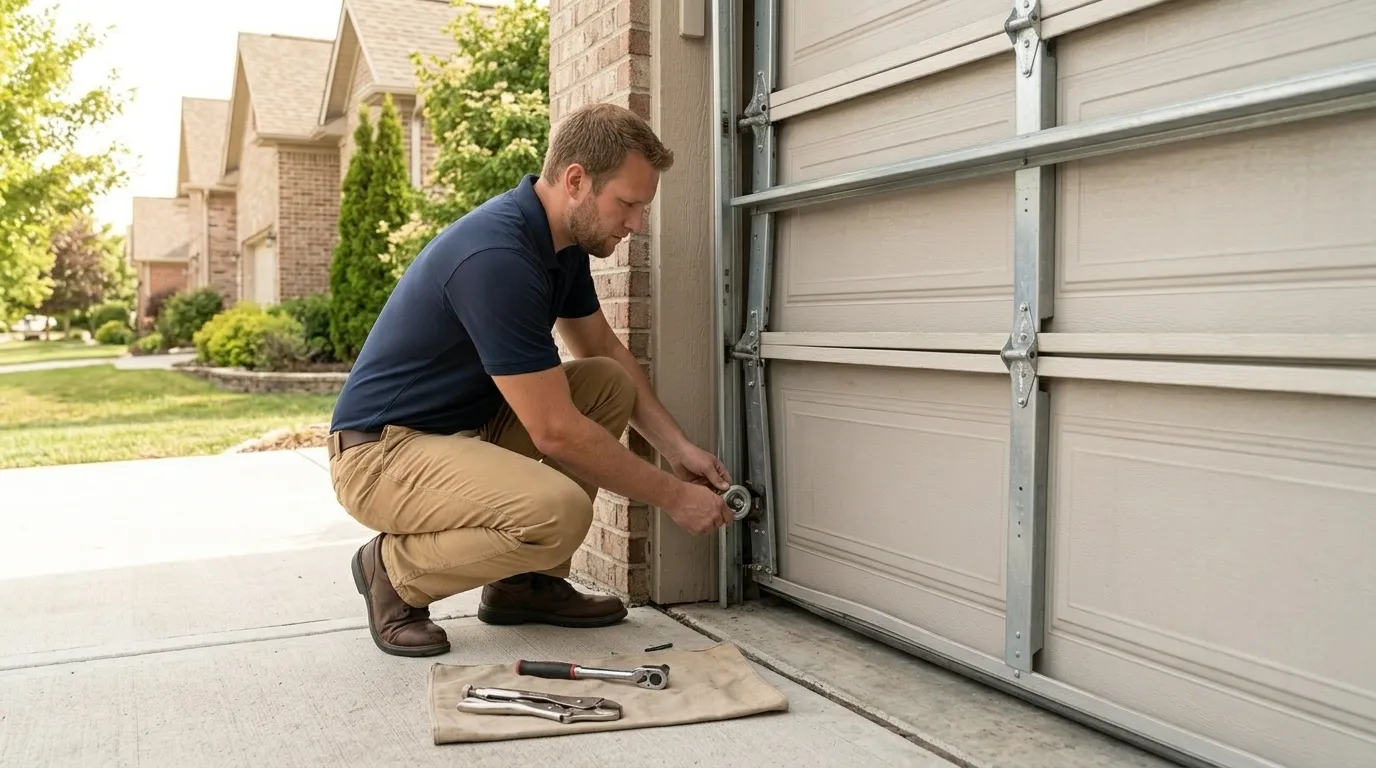
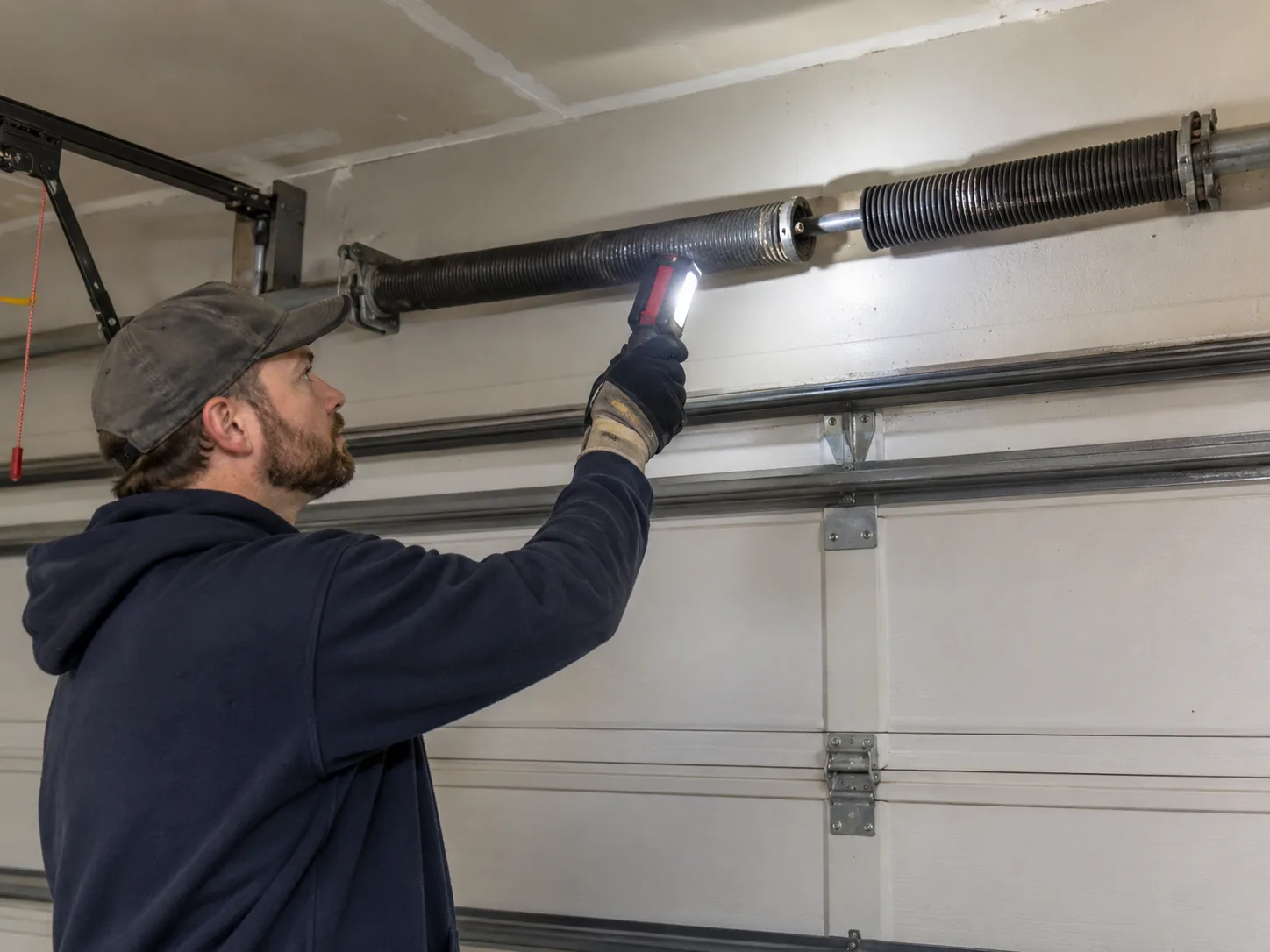
Most of the service area we cover built out in the 1960s and 70s. Winnetka didn't. The median year built here runs closer to 1938, a generation older than the surrounding towns, and that gap matters more on a commercial door than a house one. A door installed on a 1938-era structure was sized for a different kind of use - fewer cycles a day, lighter loads, no forklift traffic, no delivery trucks backing in twice an hour. When a business moves into one of these older buildings and starts running the door hard, the track, the jamb hardware, and often the header itself are still whatever went in with the original construction. Nobody upgraded them because nothing forced the issue until now. We see this pattern more in Winnetka than almost anywhere else we work: original steel track bolted to wood framing that's shifted over eight decades, on a door now expected to cycle all day. That combination is the actual local fault, not generic wear. A door that looks fine standing still can be out of plumb by enough to load one roller far harder than the rest, and that's the kind of thing that only shows up once you're running it commercially.