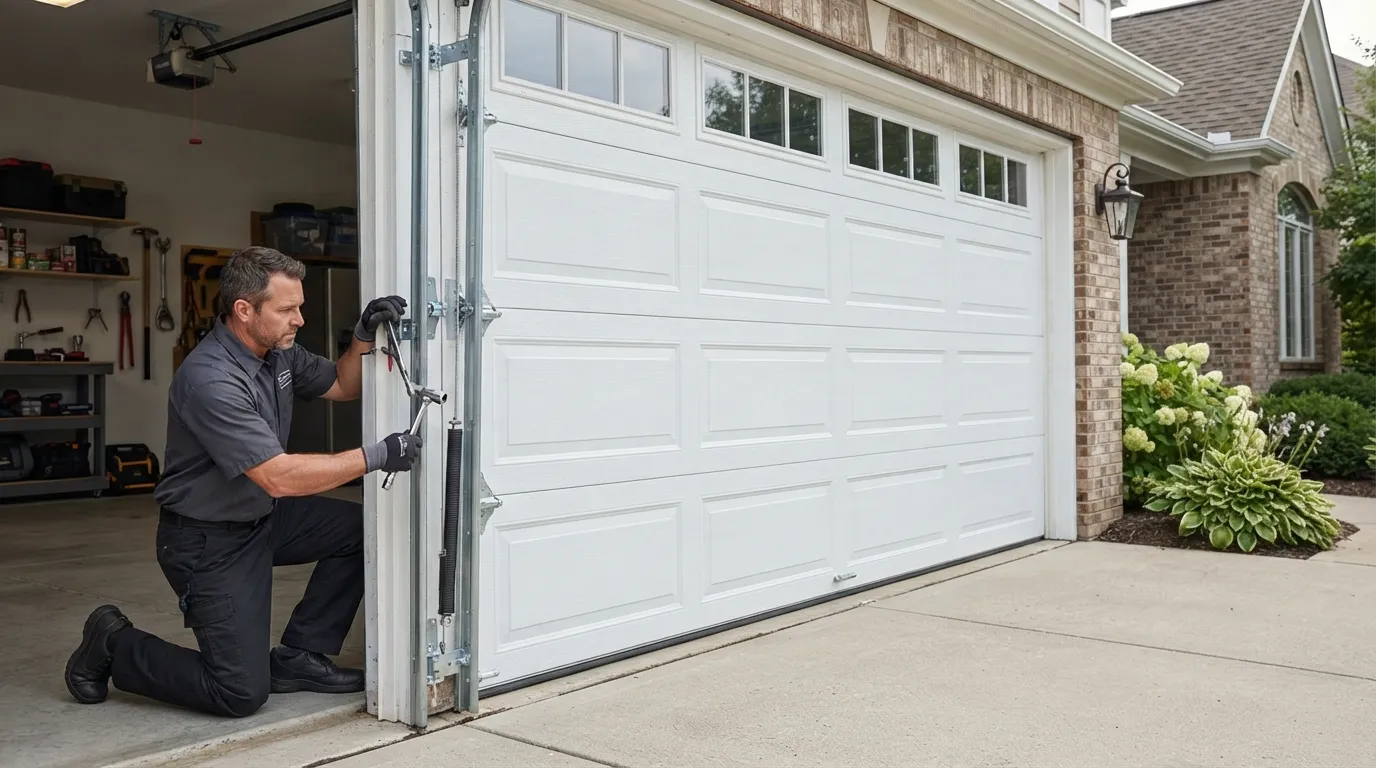
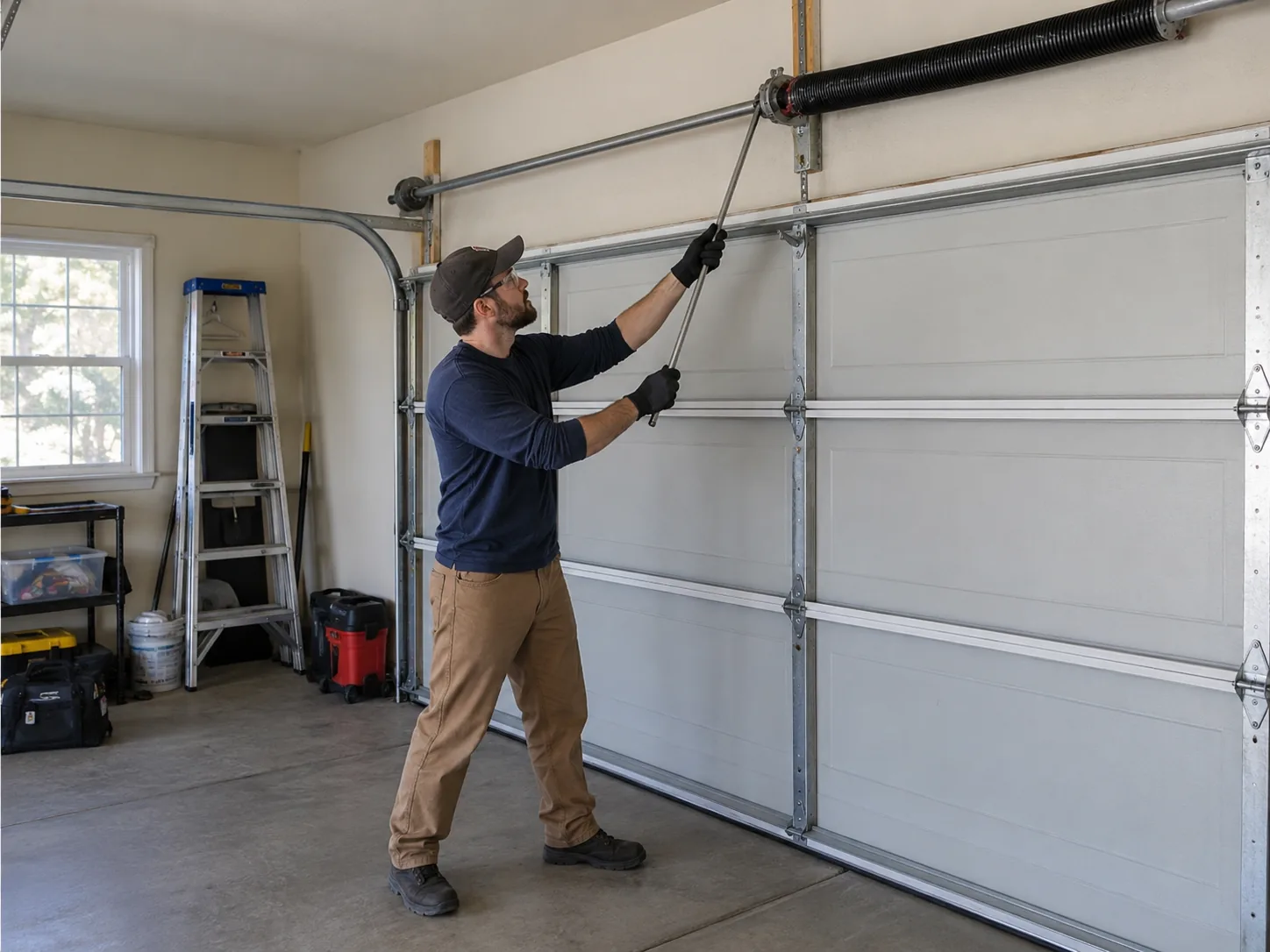
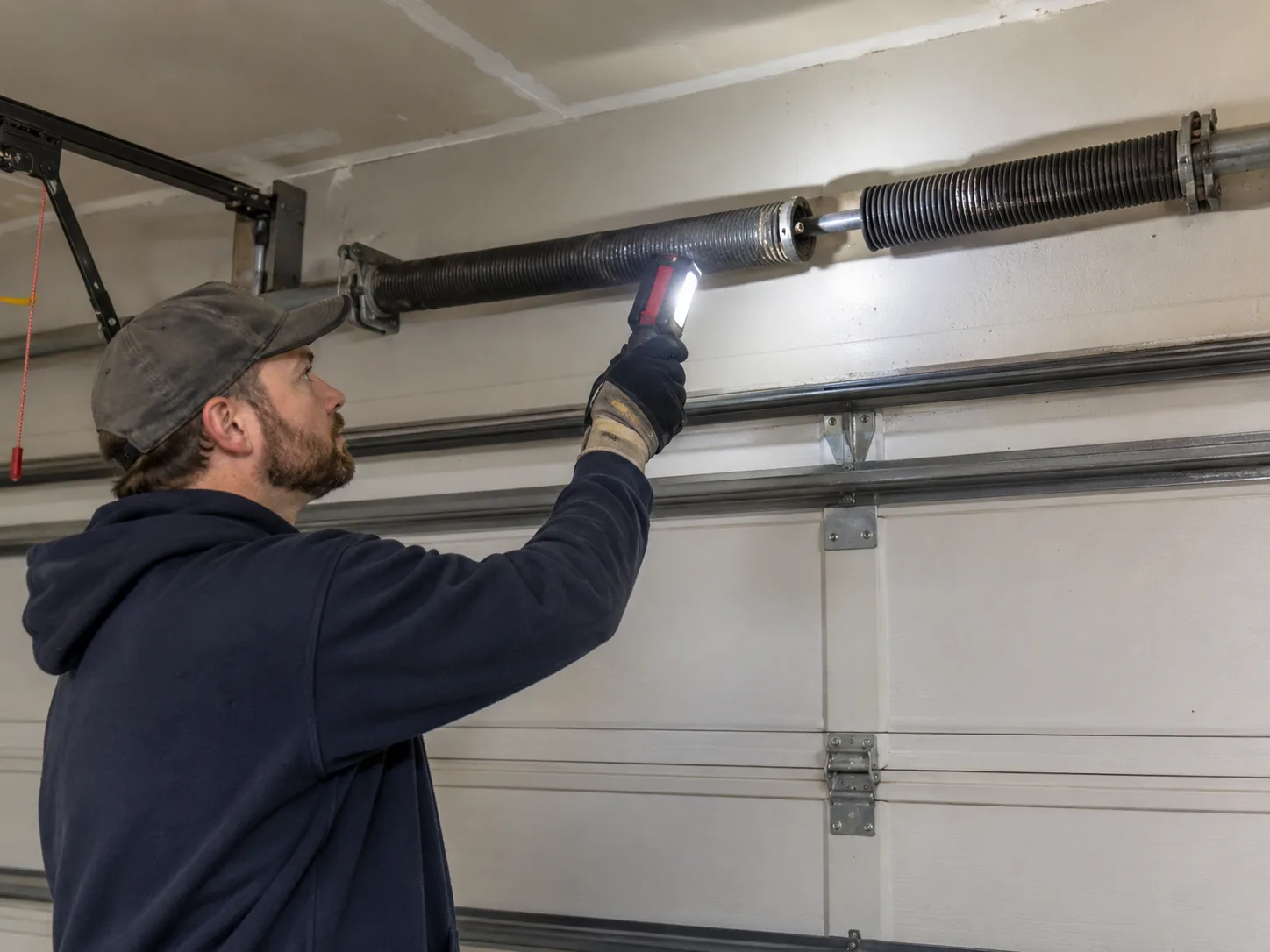
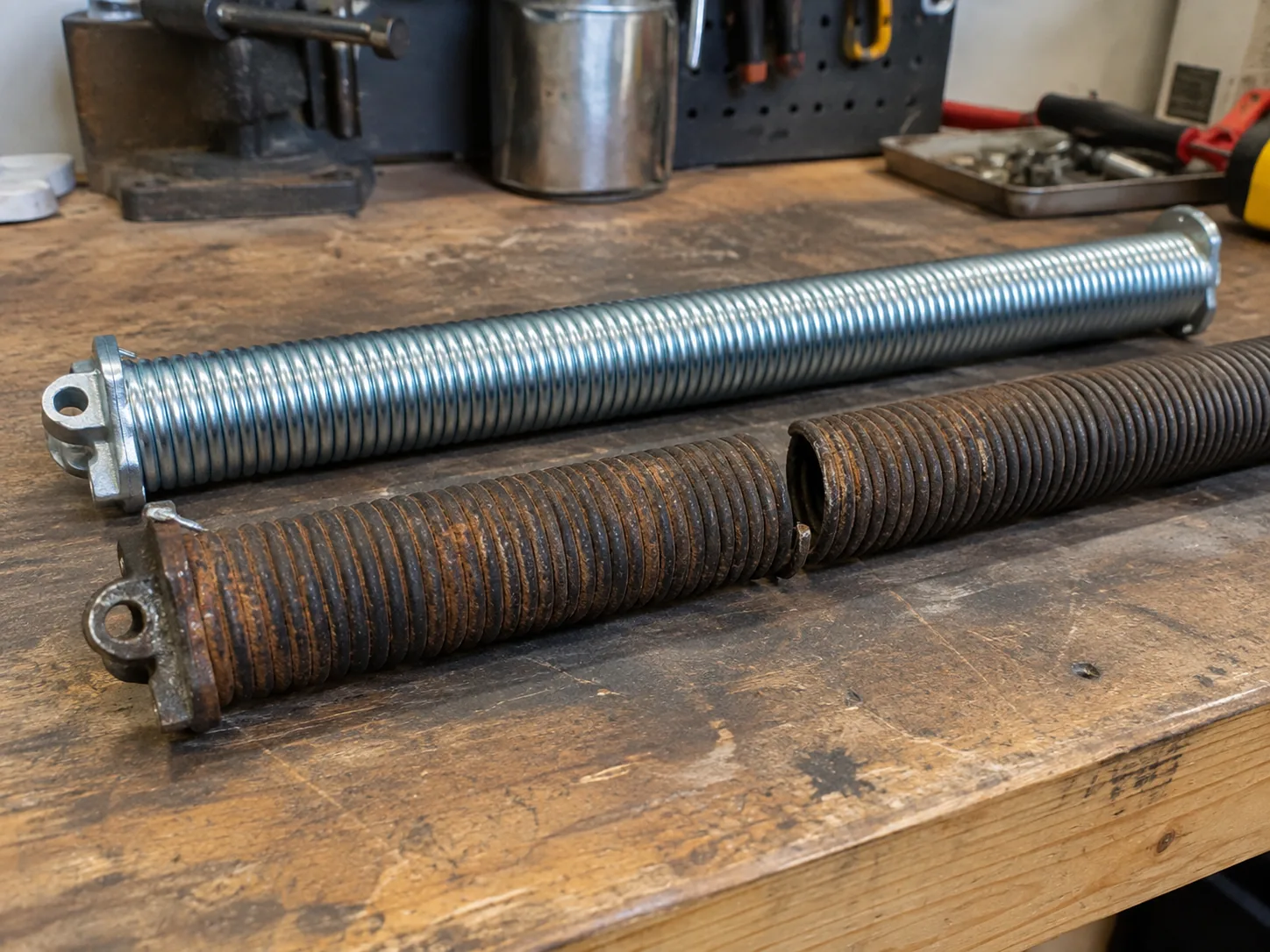
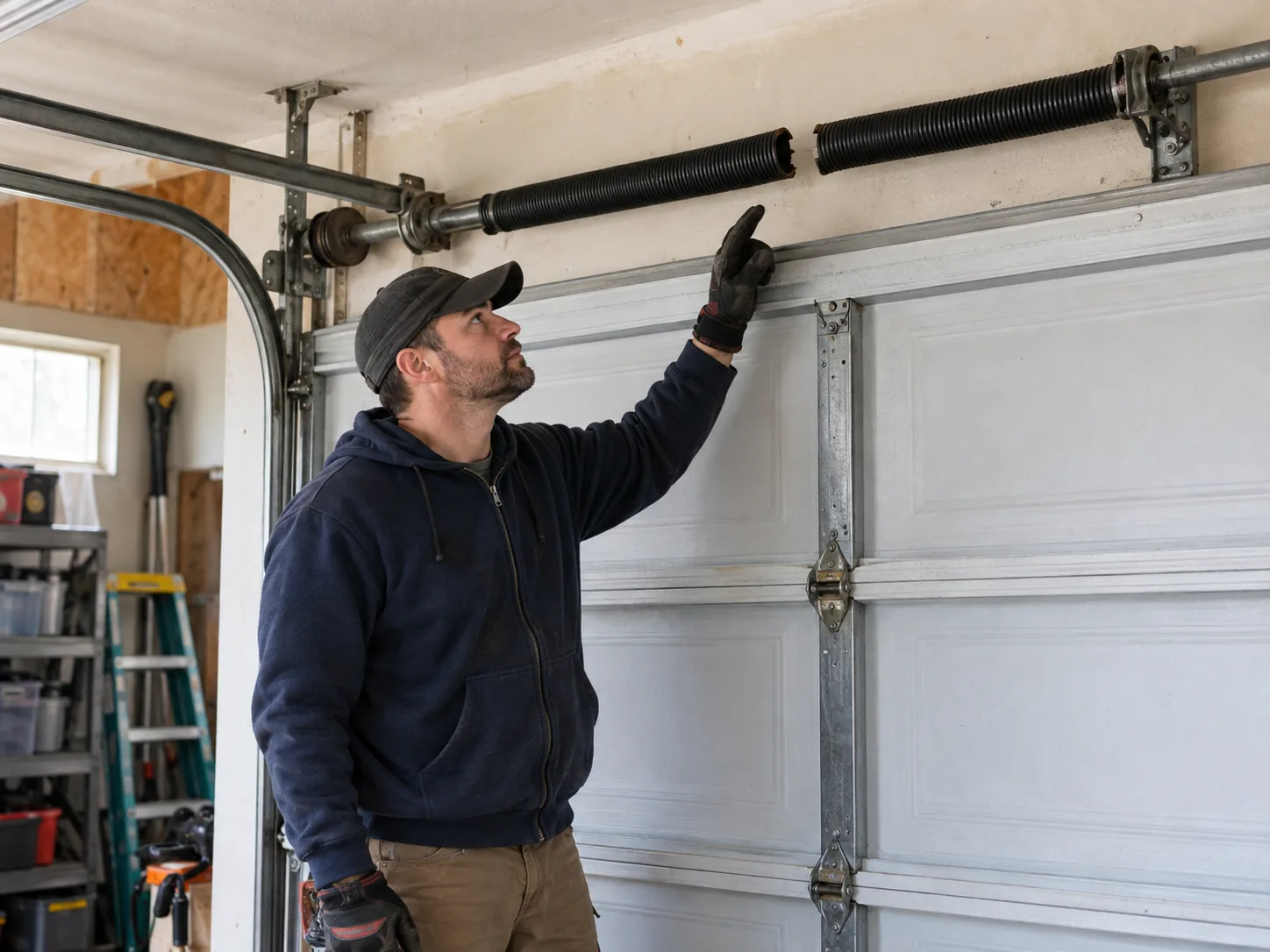
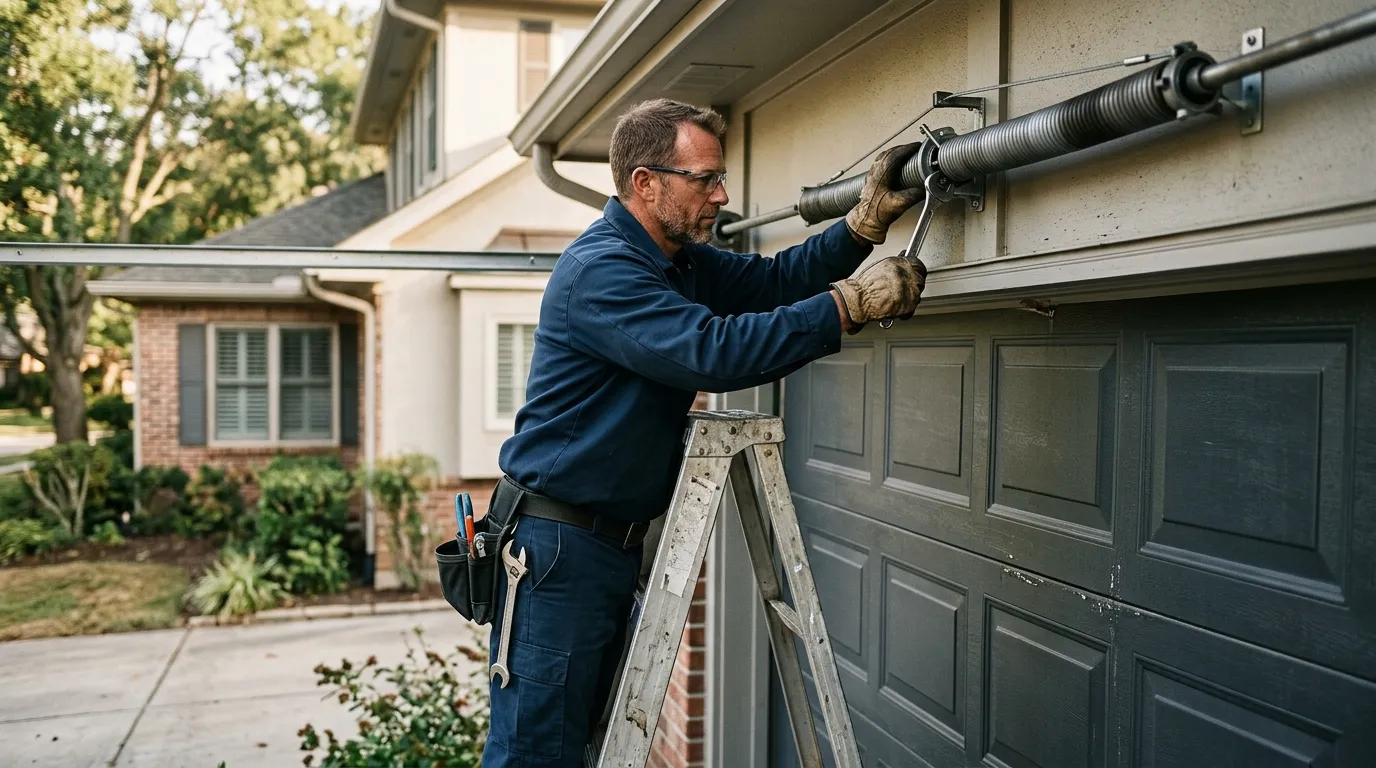
A worn roller doesn't usually announce itself with a bang. It starts as a rhythmic thump every few feet as the door travels, then a grinding squeal that gets worse in cold weather, then a door that hops or shudders right at the spot where the worn wheel meets a seam in the track. On the older stock common around Western Springs - doors going up around 1960 - that wear often shows up first at the bottom section, where the roller carries the most weight and sees the most flex.
If a roller has already jumped the track, don't run the opener to try to force it back - that's how a stem punches through a stripped panel hole and turns a $30 part into a full section replacement. Kill power to the opener, leave the door where it sits, and call. We'll tell you on the phone whether it sounds like a roller issue or something else riding along with it, like a cable or a hinge that's about to go the same way.