
1957 prior opener swaps
That gap matters more than it sounds like on paper. A door built into a 1957 house has usually gone through at least one prior opener swap and, more often than not, a mismatched roller size somewhere along the way.
Westchester, Skokie
Westchester's median home dates to 1957, six years older than Skokie's own median. That older stock changes what roller and track work looks like here.
Job timing
Skokie's own housing stock, where this company is based, runs 1938 to 1994 with a citywide median of 1963. Westchester's median build year lands at 1957 - six years earlier.
That gap matters more than it sounds like on paper. A door built into a 1957 house has usually gone through at least one prior opener swap and, more often than not, a mismatched roller size somewhere along the way.
Steel rollers from that era ran narrower stems than what ships standard today, so a straight parts swap without checking the roller bracket can leave the door binding on the track within a season. Across the wider service area, 152,489 of 325,582 households own their homes, and a fair share of those houses share Westchester's older build pattern.
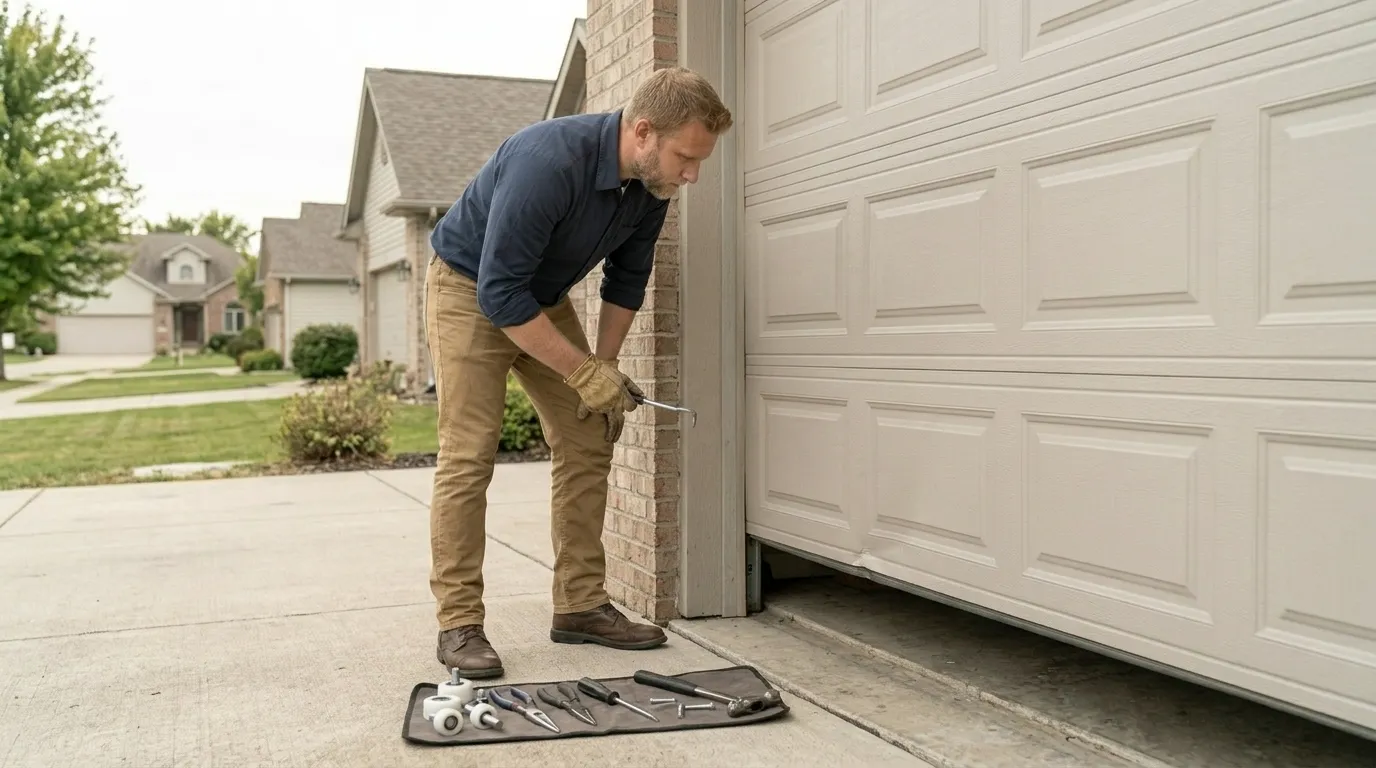
On a 1957 track, worn rollers usually show up as noise first - a grind or a shudder as the door passes the bend from vertical to horizontal track - well before a cable or spring lets go. Catching that noise early is most of the job.
Our process
On track this old, the first step isn't the roller - it's the track itself. Decades of settling can leave the vertical rails a few degrees off plumb, and a new roller dropped into a track that's out of true will just wear the same way the old one did, only faster.
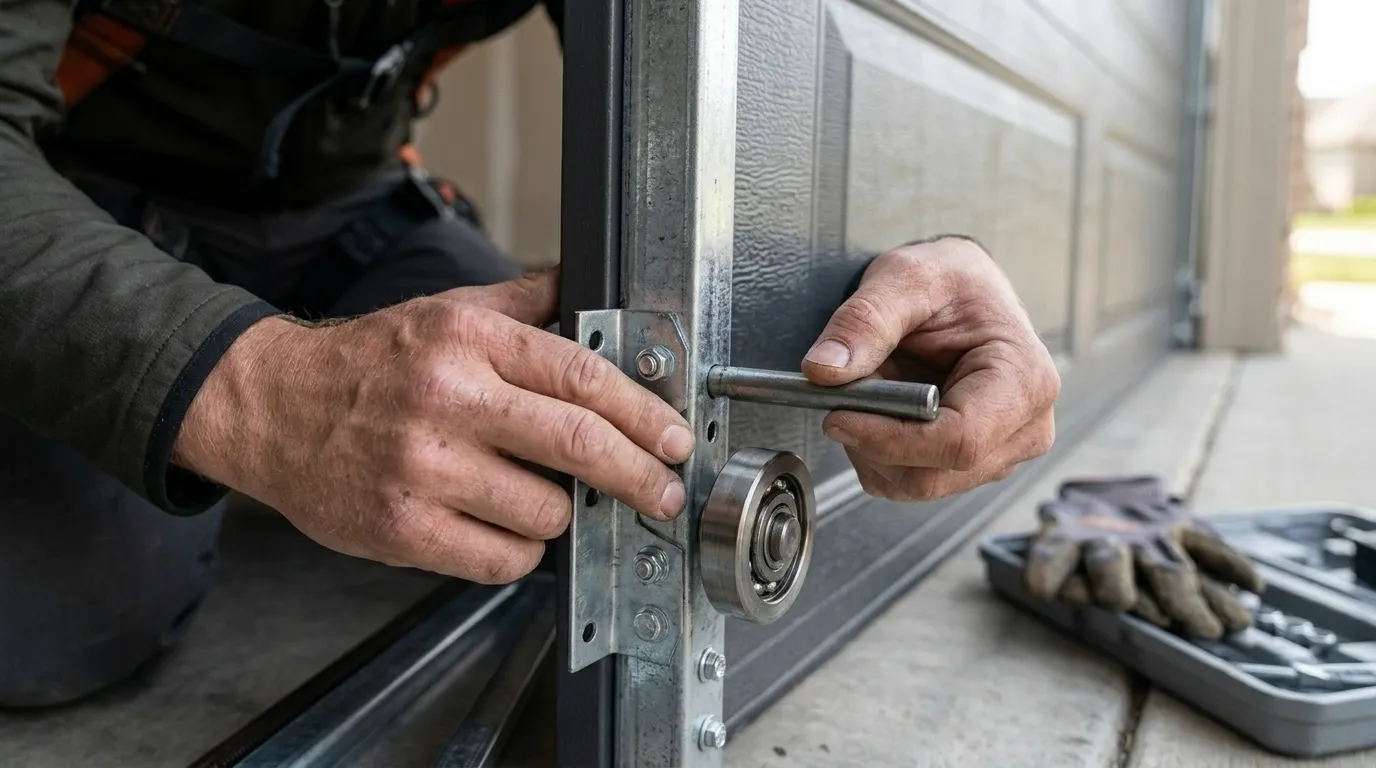
We check plumb and reset the brackets before anything else goes in. For the roller itself, nylon with a sealed bearing is the standard swap now, replacing the steel wheels a lot of Westchester's original doors still carry.
Nylon runs quieter and doesn't need the periodic oiling steel does, which matters in a cold climate band like this one - steel rollers on unheated garages tend to stiffen and flat-spot over a hard winter, where sealed nylon bearings hold up better.
We won't put new rollers on a bent or rusted-through track section; in that case the track gets replaced first, because a new roller on bad rail is a callback waiting to happen. We also check cable and hinge condition while we're in there, since a roller job is the cheapest time to catch a fraying cable before it becomes its own emergency.
Booking
There's no branch office in Westchester - this crew runs out of Skokie, about 15 miles out, for every job in this suburb. That distance doesn't change what we bring to the job, but it does mean scheduling works better with a bit of lead time rather than a same-hour walk-in request.
When you call, tell us the roller type you can see (steel wheels versus the newer nylon rollers) and roughly how old the door is; for a house built around 1957, that's often enough for us to bring the right bracket hardware on the first trip instead of a second one.
Westchester runs smaller than some of the areas we cover - around 7,084 households - so we're not out here every day the way we might be in a larger suburb.
That's fine. It just means we plan the drive around a full stop rather than working you in between other calls, which usually means a tighter window once the visit is set.
Pricing
We're not going to put a number here that isn't grounded in what we know about your door, and roller jobs vary more than most homeowners expect. A full set of ten nylon rollers on a double door costs differently than replacing four rollers on one side of a single door with a track reset thrown in. Westchester's median household income runs $103,561, higher than the $96,794 median across the wider service area, but that figure tells you nothing about what your own door needs - it's not a pricing input, just context.
The honest answer is that we price roller jobs after we've looked at the track and the rollers in person, not over the phone. If your track is bent or the vertical rail has rusted through, that adds a step we can't quote sight unseen. What we can tell you is that catching a worn roller before it takes the track out with it is almost always the cheaper visit.
Questions
The housing tends to run a bit older on average - Westchester's median build year is 1957 versus Skokie's citywide median of 1963. That means more original steel rollers and narrower roller stems still in service here, which changes what parts we bring and whether the track needs resetting before new rollers go in.
Rollers usually announce themselves with noise - a grind, squeal, or shudder as the door passes the curved section of track - while the door still opens and closes under its own power. A spring problem shows up as the door feeling heavy, uneven, or refusing to stay open. If it's noisy but still moving on its own, start with the rollers and track.
No. This is a Skokie-based crew that drives out to Westchester, about 15 miles, for scheduled jobs. There's no local depot here, so we plan visits with a bit of lead time rather than offering same-hour drop-ins.
Not always. If only one or two rollers on one side are worn and the rest are sound, we'll replace just those. We don't push a full ten-roller set on a door that doesn't need it - though if the track itself is bent, replacing rollers alone won't fix the underlying problem.
Explore more
Ready when you are
Skokie Garage Door Pros repairs and installs garage doors, springs and openers in Skokie, IL and the surrounding area.